


CAMBRIDGE (MASSACHUSETTS, USA)
Client: Salata Institute for Climate and Sustainability at Harvard University
Date: 2024
Status: Completed
Program: Plug-in urban furniture for combatting extreme heat and increasing biodiversity in urban settings
Scope: Research, design, construction and management of temporary installation
In the context of climate change, extreme heat is pervading many spaces around the world. This, coupled with projected climatic trends, endangers the feasible and comfortable use of outdoor public spaces. As a result of the changing climate and the park equity gap, vulnerable communities will disproportionately face the largest consequences. Polinature has been designed as a temporary solution to mitigate the effects of climate change in these vulnerable communities.
Polinature is the evolution of projects and research conducted by Ecosistema Urbano that aim to improve the bioclimatic conditions in diverse contexts and climates. This line of work places a particular emphasis on producing quality public spaces that are climatically comfortable as a method for improving equity in urban environments.
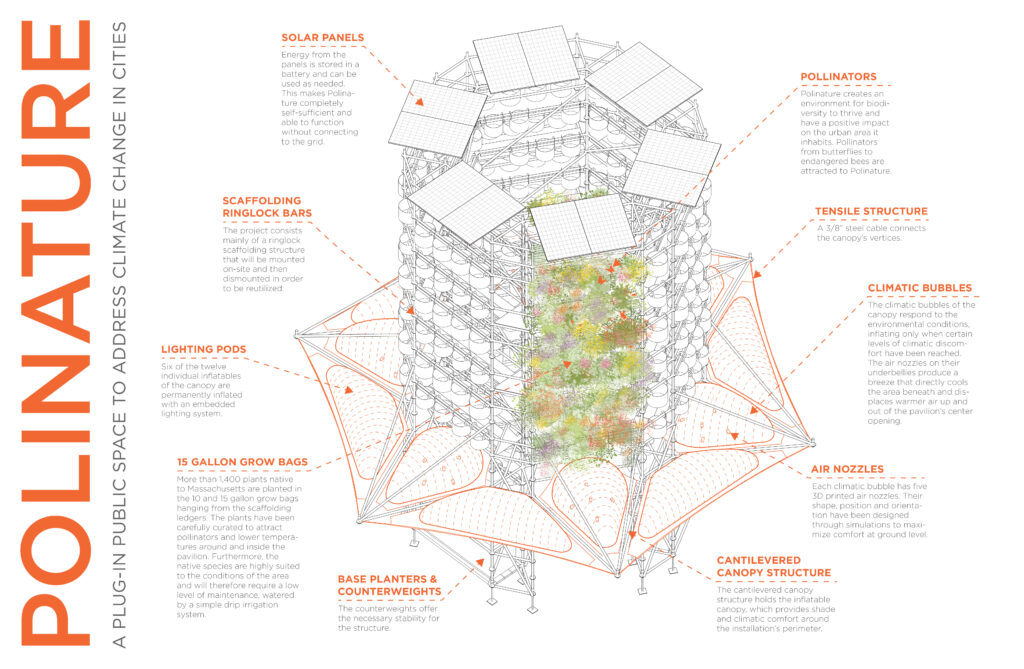
Urban Biodiversity Kit
As a landmark in the public realm, Polinature is a space that creates conditions that allow for people to comfortably congregate, thus spurring conversations and action among citizens. It has been designed as a kit-of-parts with three fundamental components: scaffolding, native plants and a canopy. These parts are easily assembled and disassembled; furthermore, they are affordable, accessible and re-usable, thus making it possible to generate zero waste. In addition to these physical elements, there are three themes integral to Polinature’s kit-of-parts.
Biodiversity:
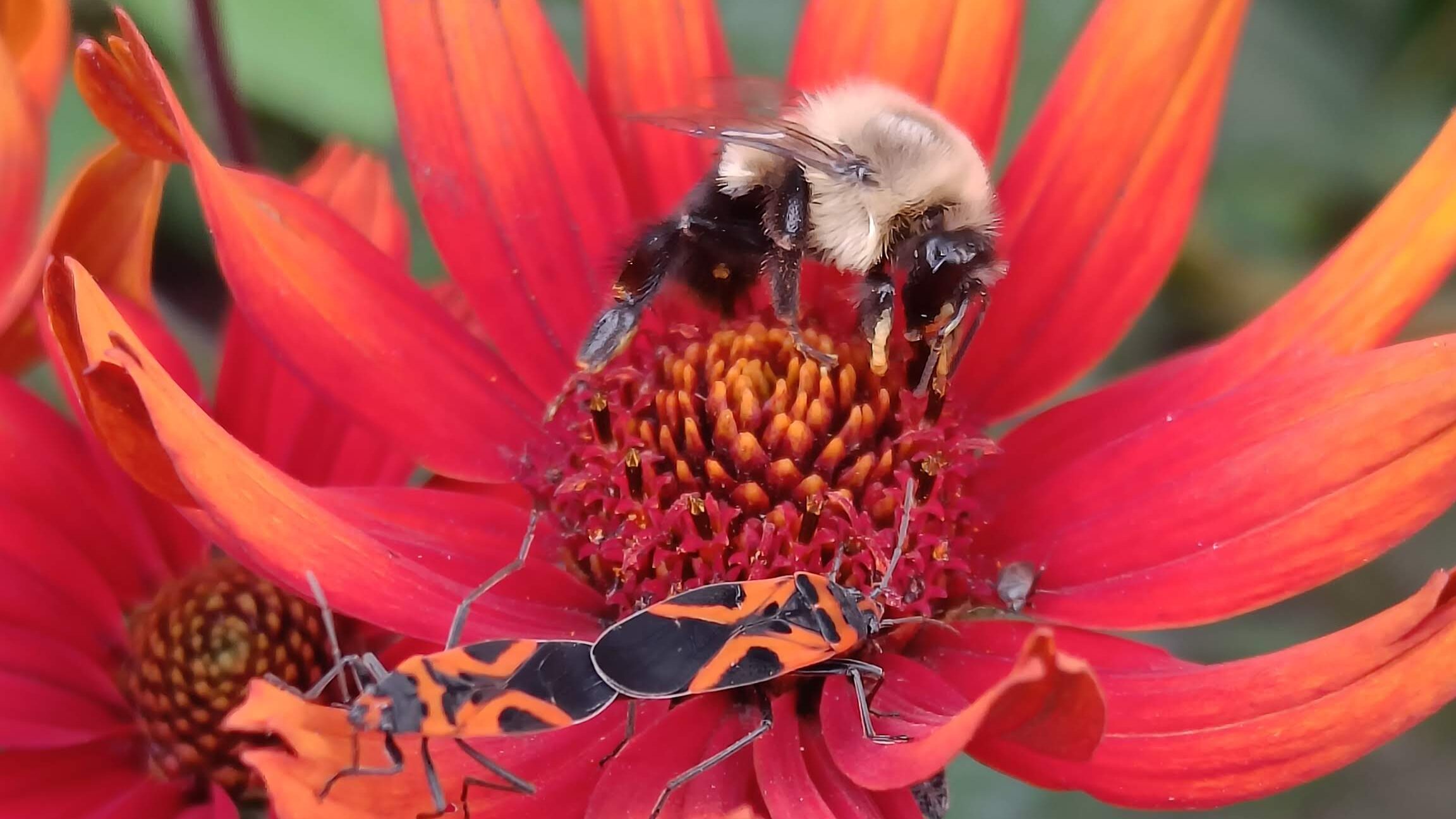
Preserving pollinator habitats is more important than ever before, and so too is the need to invent new ways to support their presence in urban areas. More than 1,400 flowering plants native to the northeast fill the bags and are pollinator friendly, promising to attract a variety of species from honeybees to hummingbirds, monarch butterflies and everything in between.


Climatic Comfort:
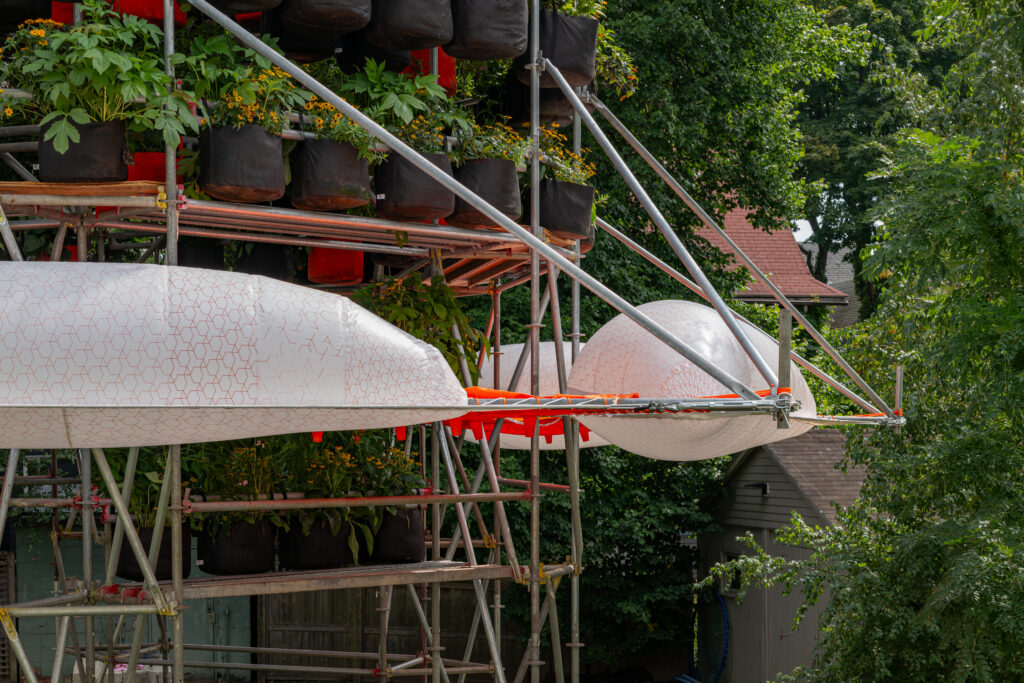
Polinature’s inflatable canopy features two elements: orange climatic bubbles and white lighting pods. Together they provide climatic comfort and illuminate the installation, activating it as a space for gathering. The canopy responds in real time to climatic conditions, inflating to release a breeze when sensors detect high heat and humidity. This breeze passes through air nozzles and creates a cooling effect in the space.


Digital Interactivity:
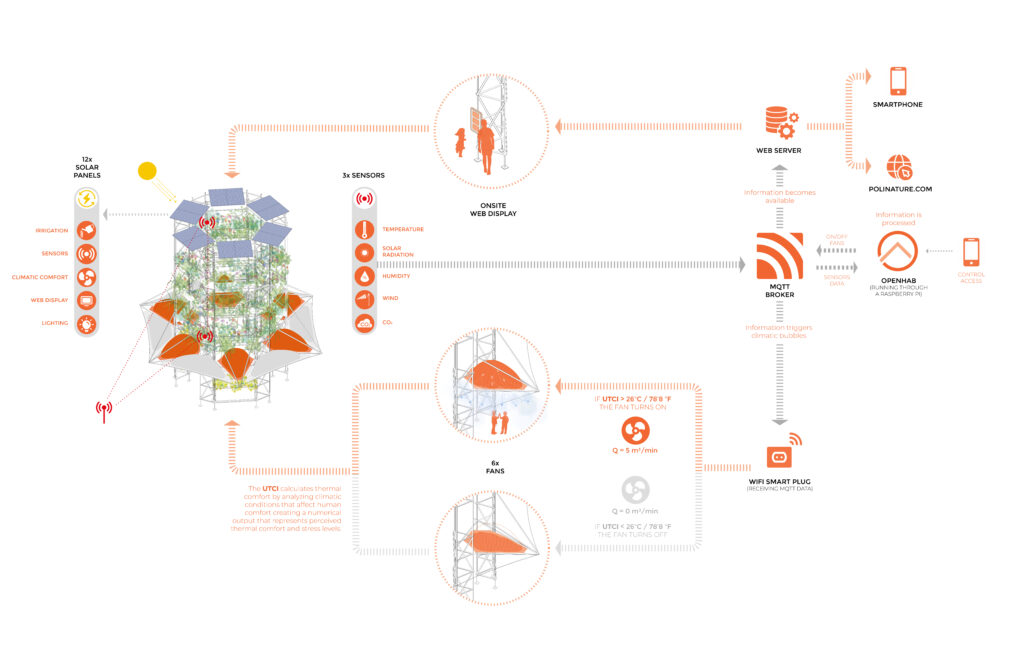
Sensors inside and outside the pavilion measure climate conditions in real time. Monitoring both data sets makes it possible to grasp the impact of Polinature, and ensure it delivers on its promise of creating climatic comfort. This information is readily available to visitors (via digital displays throughout Polinature) giving them the power to visualize and interact with their environment in a new, informed way. The digital displays are linked to polinature.com, which serves as both a data repository and a source of information on all things Polinature.
Polinature can adapt to distinct space typologies by changing an element from the kit-of-parts for a readily available, sustainable version local to the site.
The technical drawings and kit-of-parts will be made open-source so that people around the world who are eager to combat climate change in their cities can create their own Polinatures.

Credits & Collaborators
We extend a special thank you to the Salata Institute for Climate and Sustainability at Harvard University for funding Polinature, and the GSD Design Innovation Grant committee for providing us with additional funding.
Architect of Record: EvB Design
Horticultural consultant services and sensor design: Urban Horticulture Design
Landscape installation: Salt Meadow Farms Landscapes and Nurseries
Scaffolding structure construction and engineering: Seacoast Scaffolding & Equipment
Inflatable canopy: Pneuhaus
Solar panel donation: Solect Energy
Solar panel system design and installation: 621 Energy
General Contractor: Picker Construction
Design Research, Inflatable shape simulations, Grant application: Harvard GSD Students
Screen Display Case: Harvard Graduate School of Design Fabrication Lab
Air speed research and simulations: Corinne Leclerc
Web interface and sensor configuration: Álvaro Hassan
Photography: Emilio P. Doiztua
Drone footage: Pablo Pérez Ramos
Custom grow bags: Smart Pots
Information sources: Tufts Pollinator Initiative, Mass Audubon


