ROTTERDAM (NETHERLANDS)
Client: Shift
Date: 2026
Status: Completed
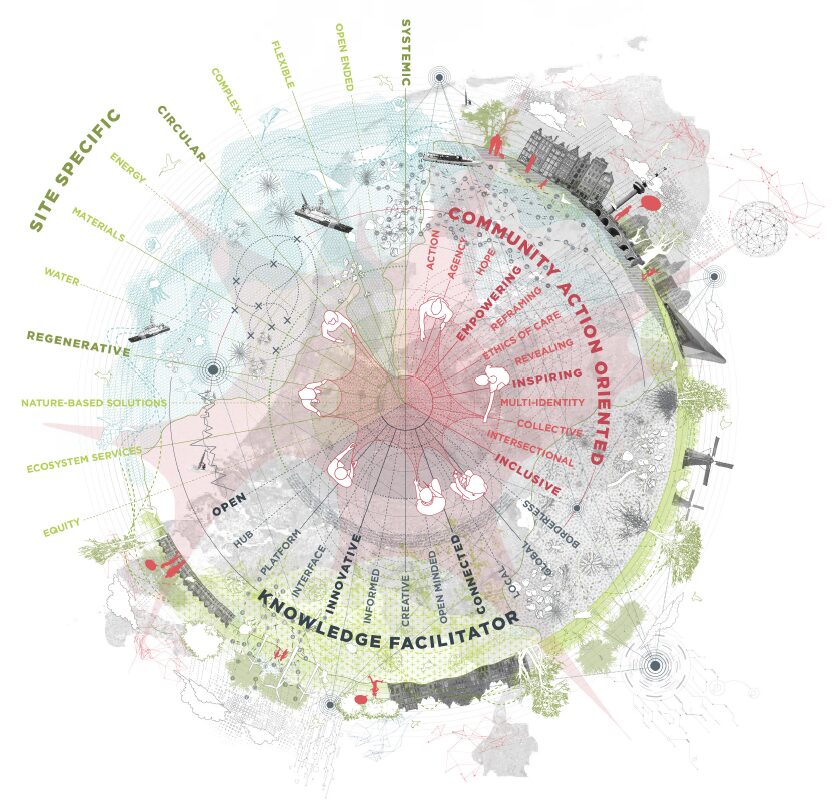
Program: a regenerative living system where architecture becomes a dynamic social organism.
Scope: Competition
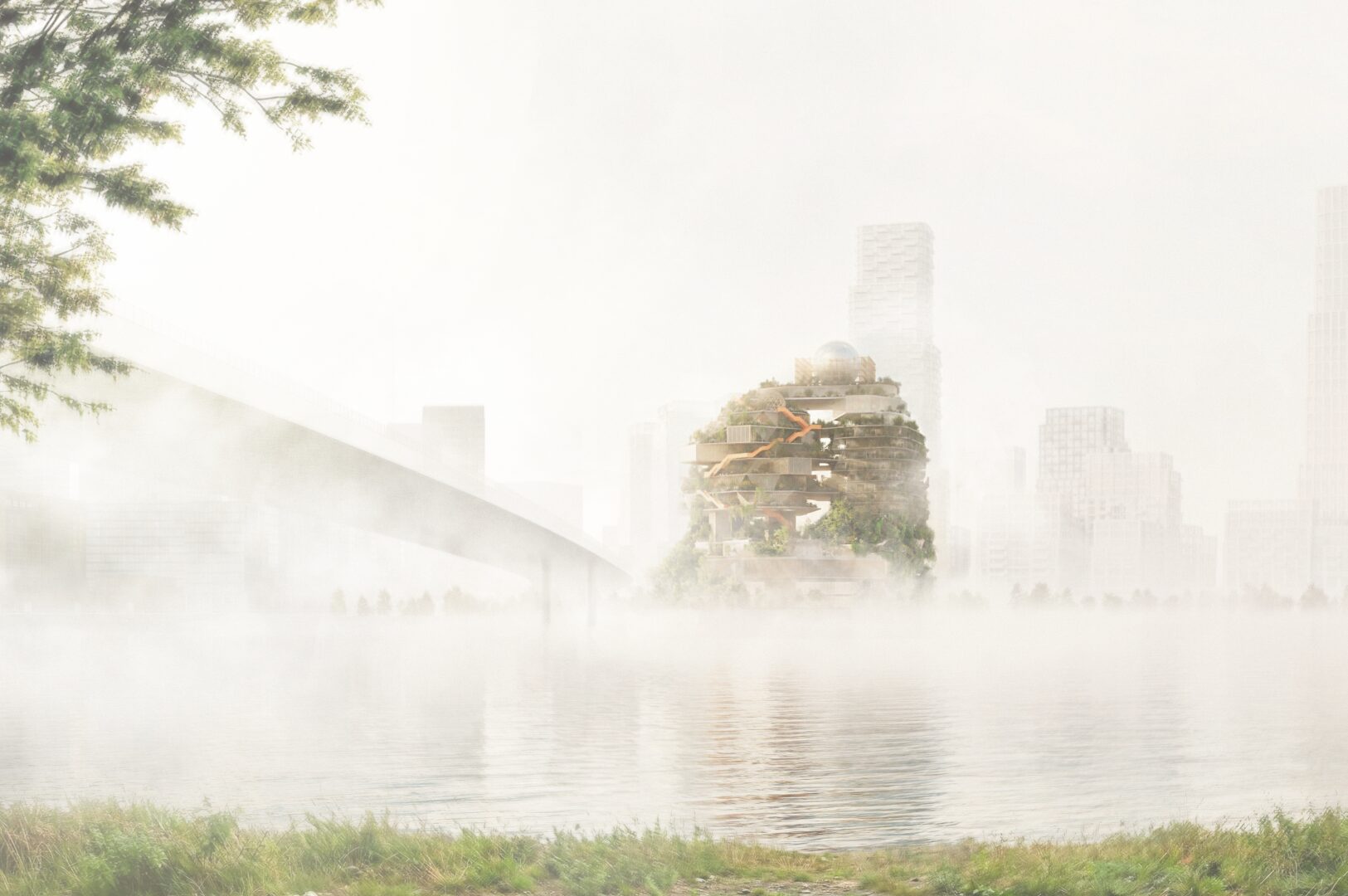
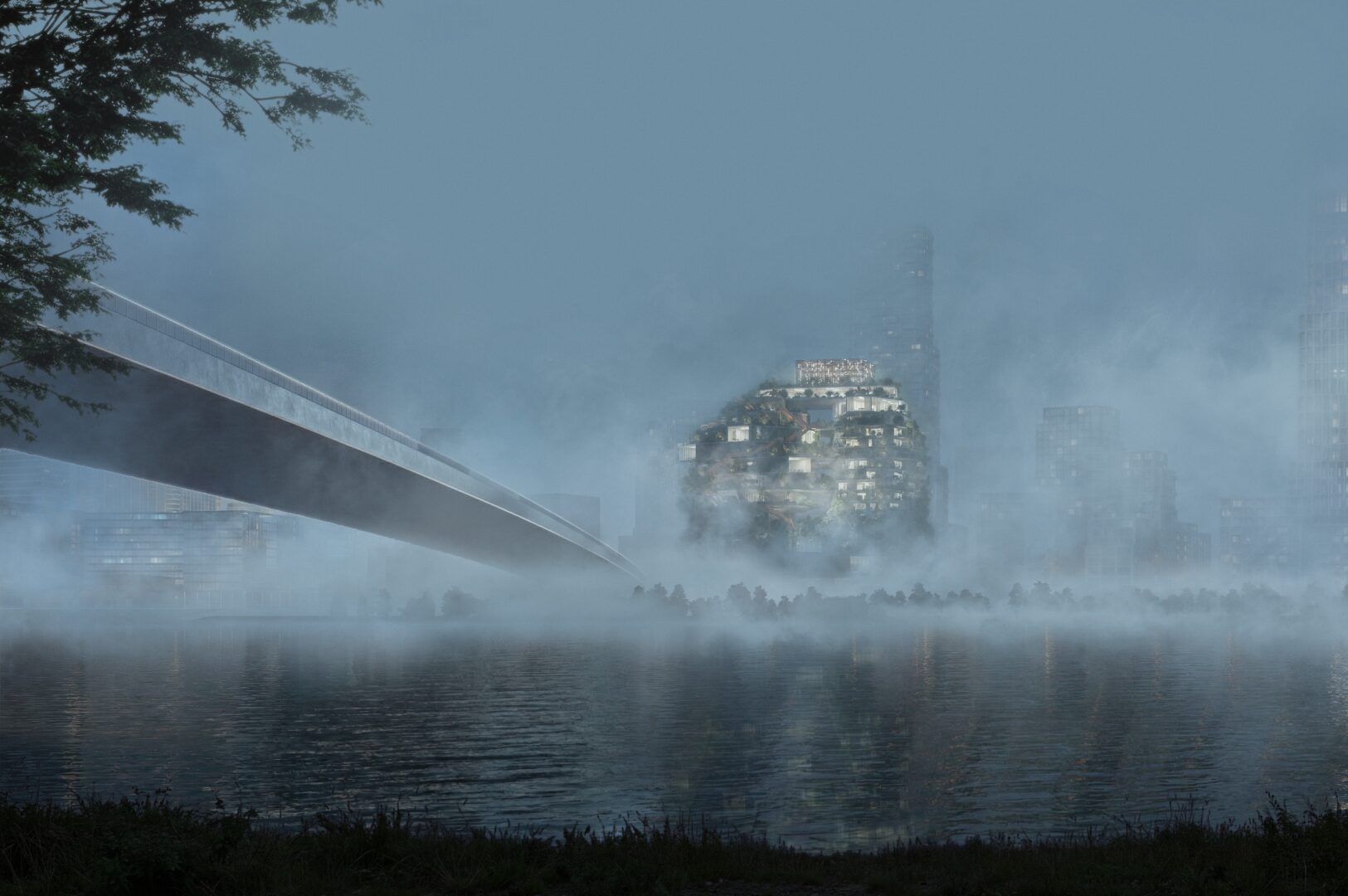
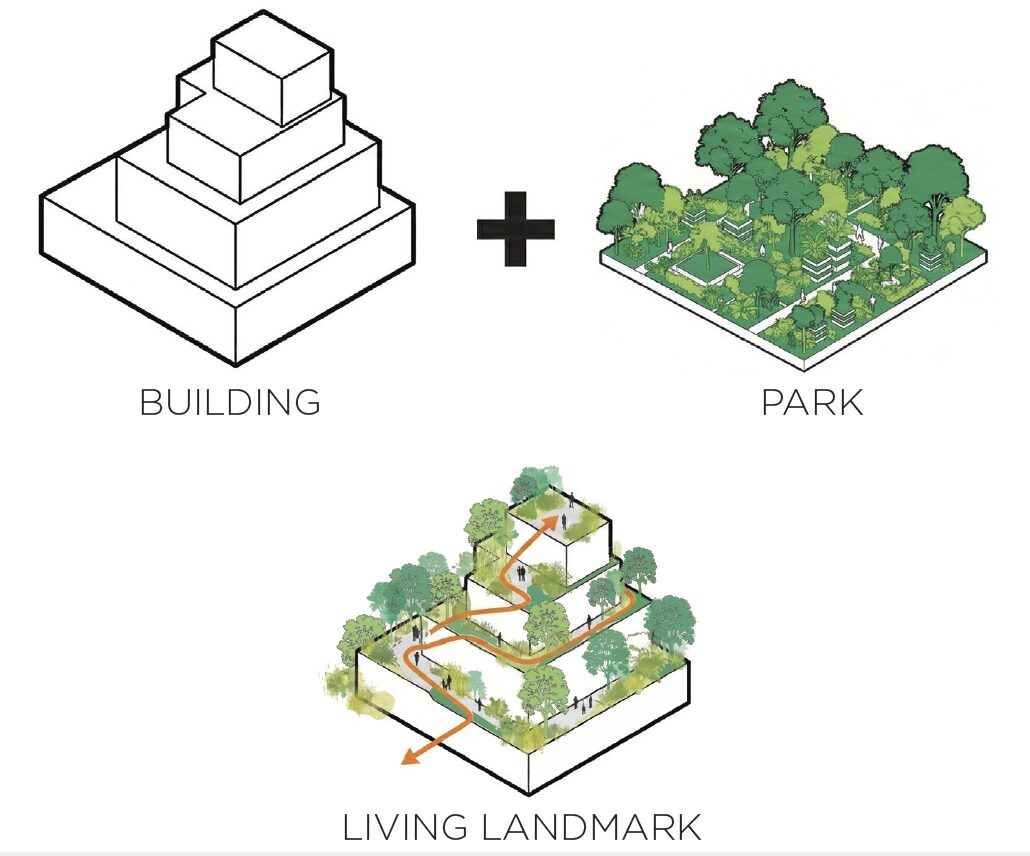
The building integrates public space, ecological performance, and civic life, actively fostering biodiversity while strengthening connections between local communities and broader ecological networks. More than a building, it is an evolving ecosystem designed to grow, adapt, and give back.
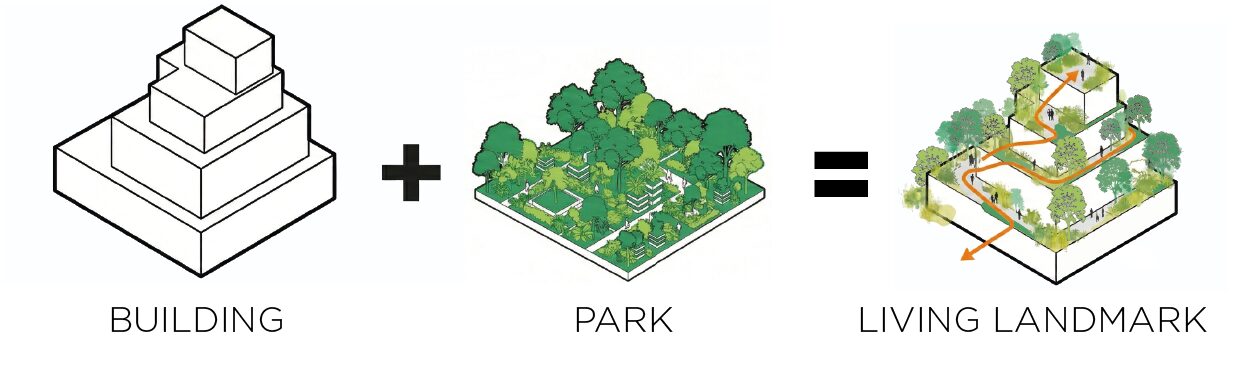
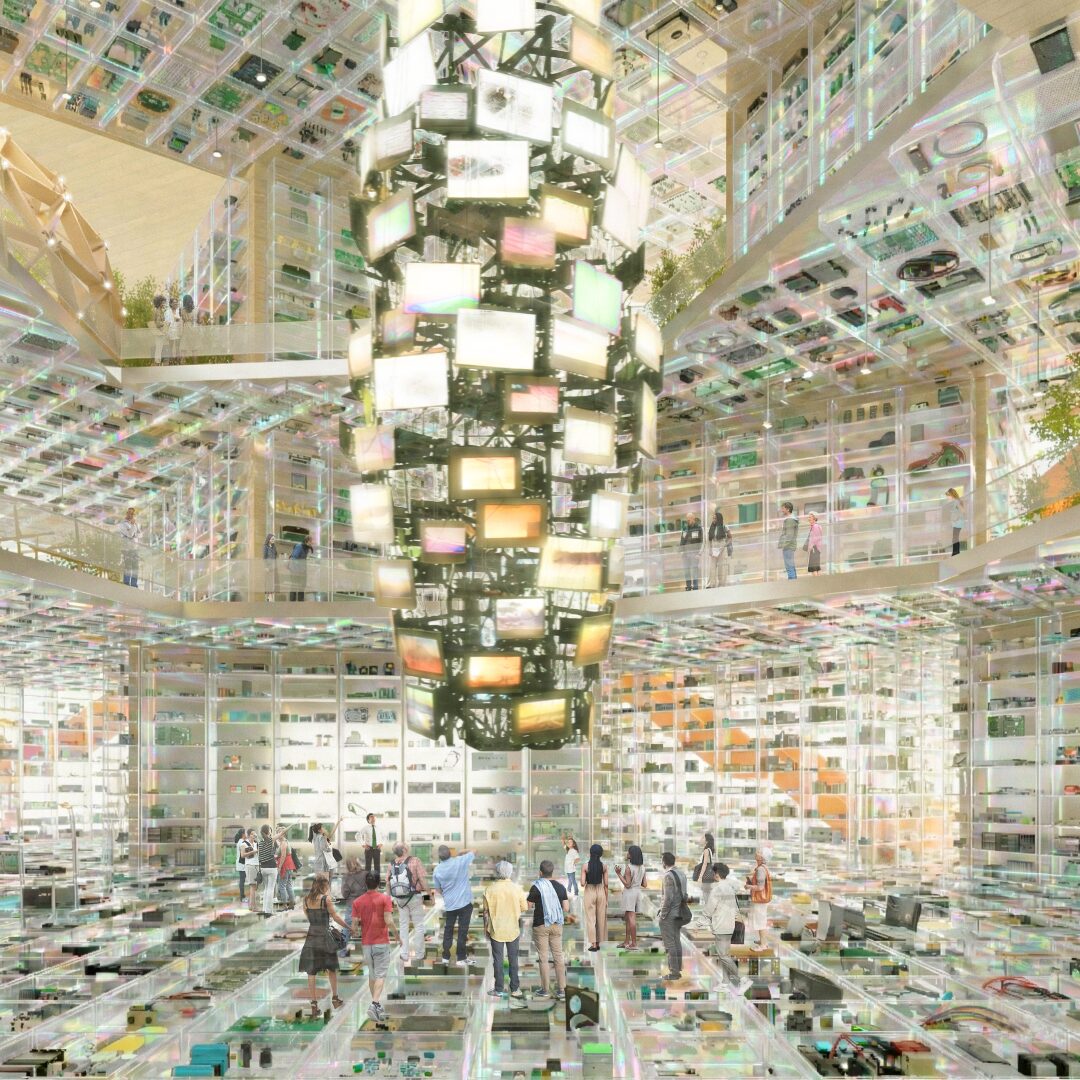
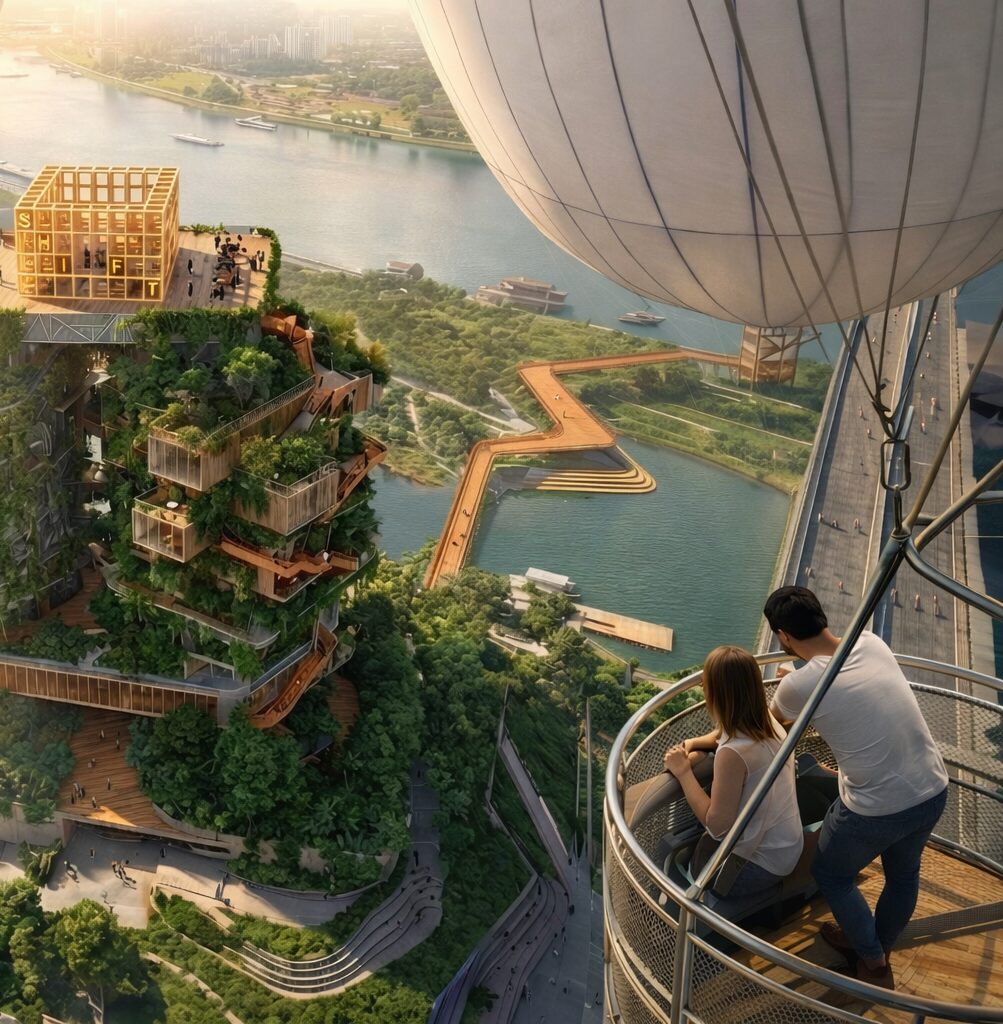
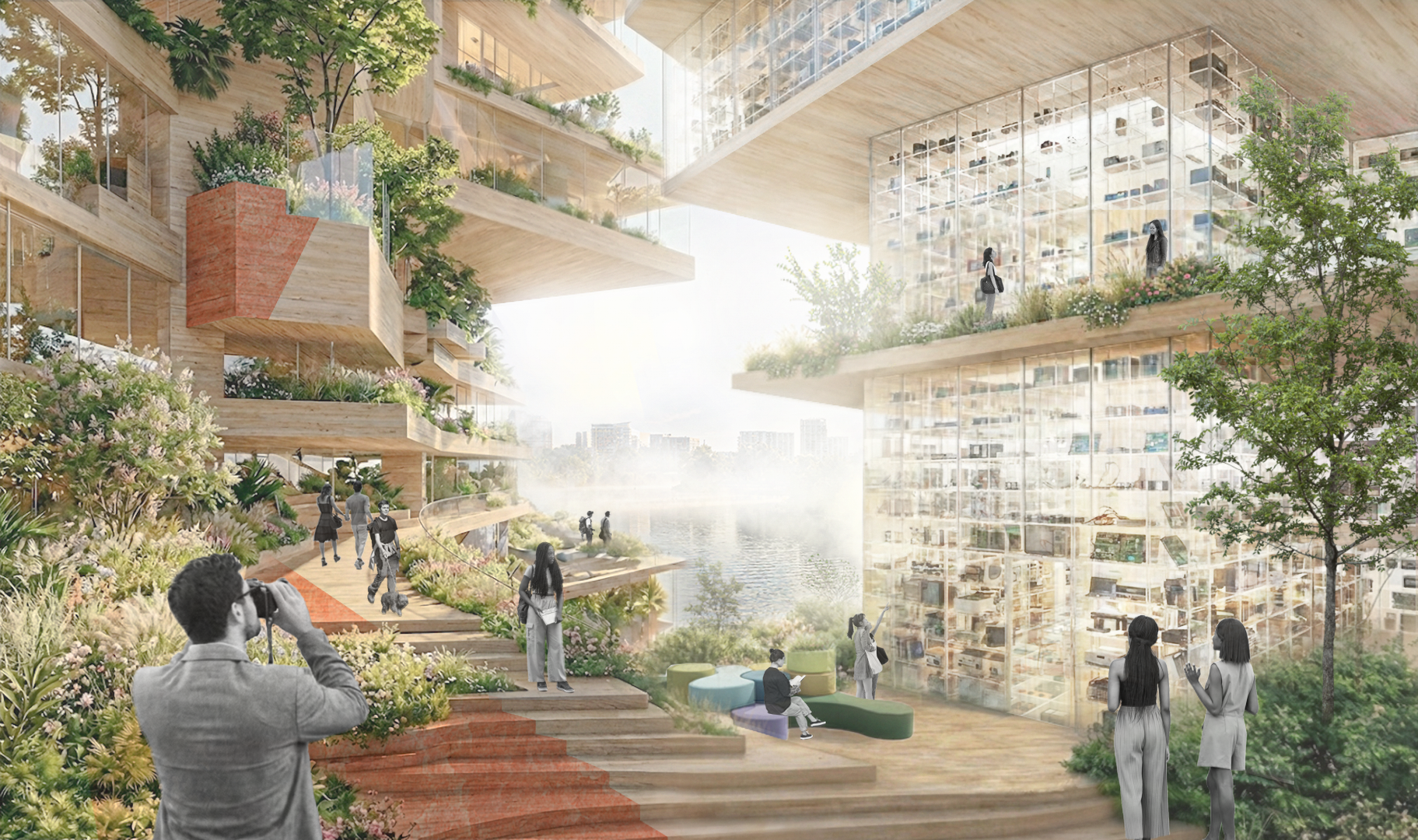
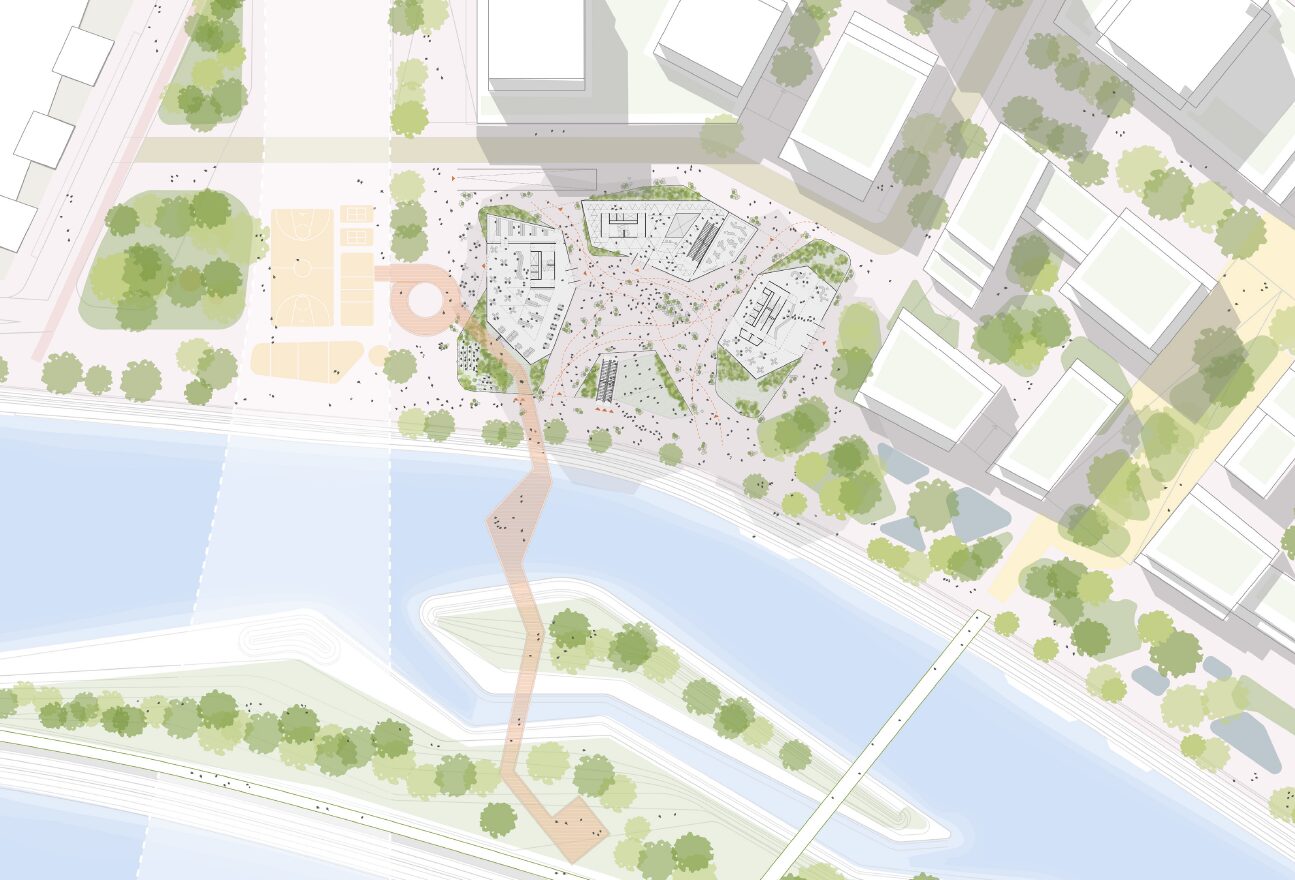
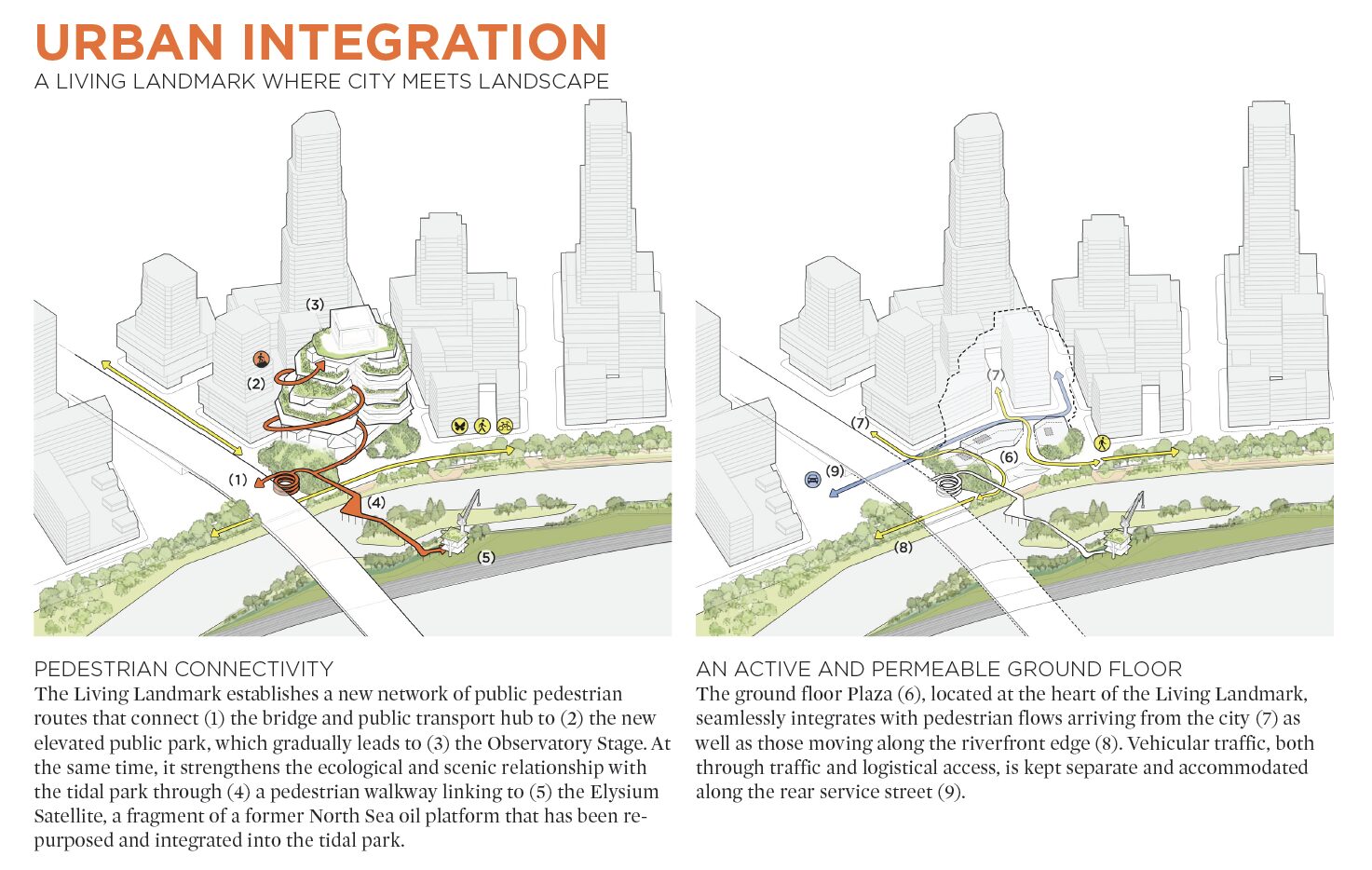
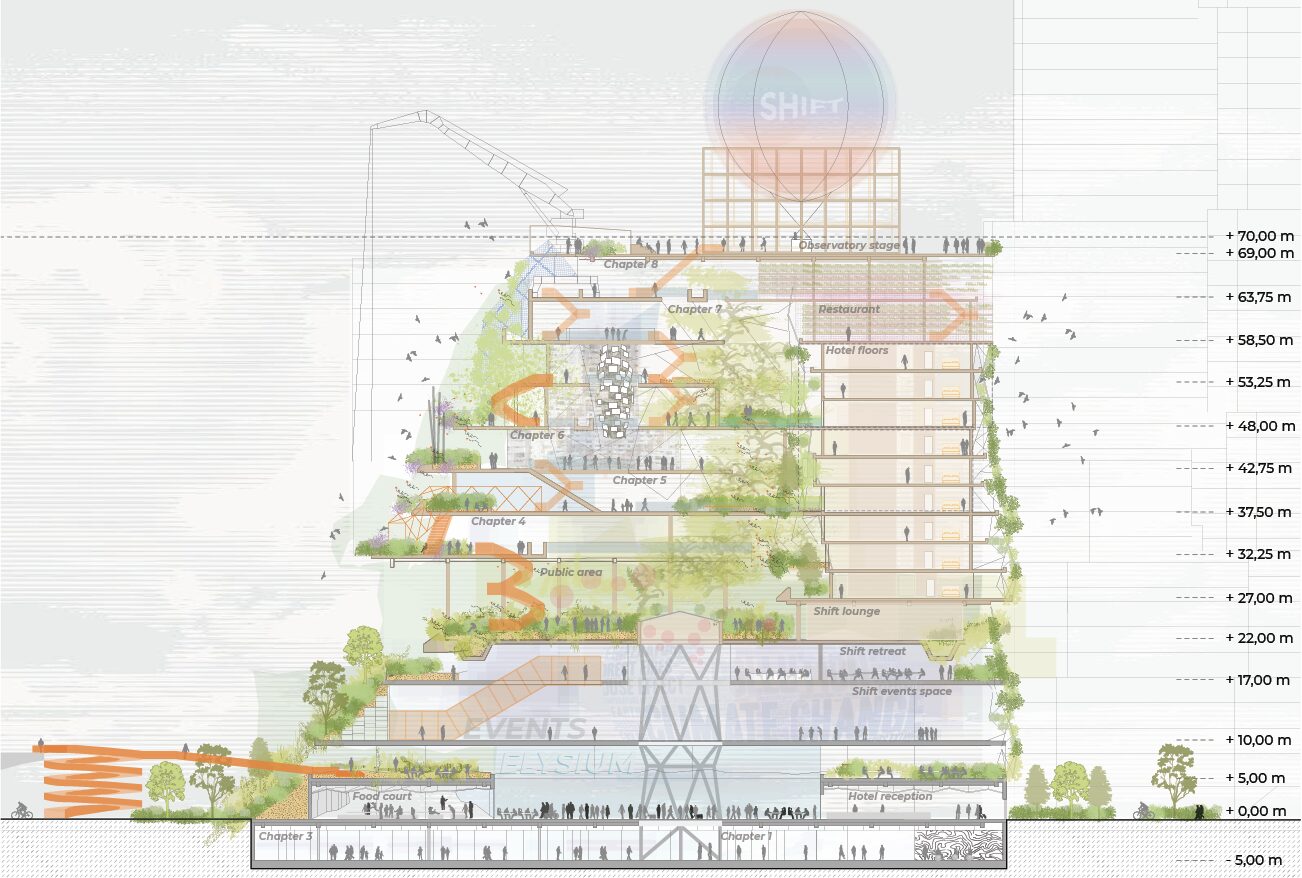
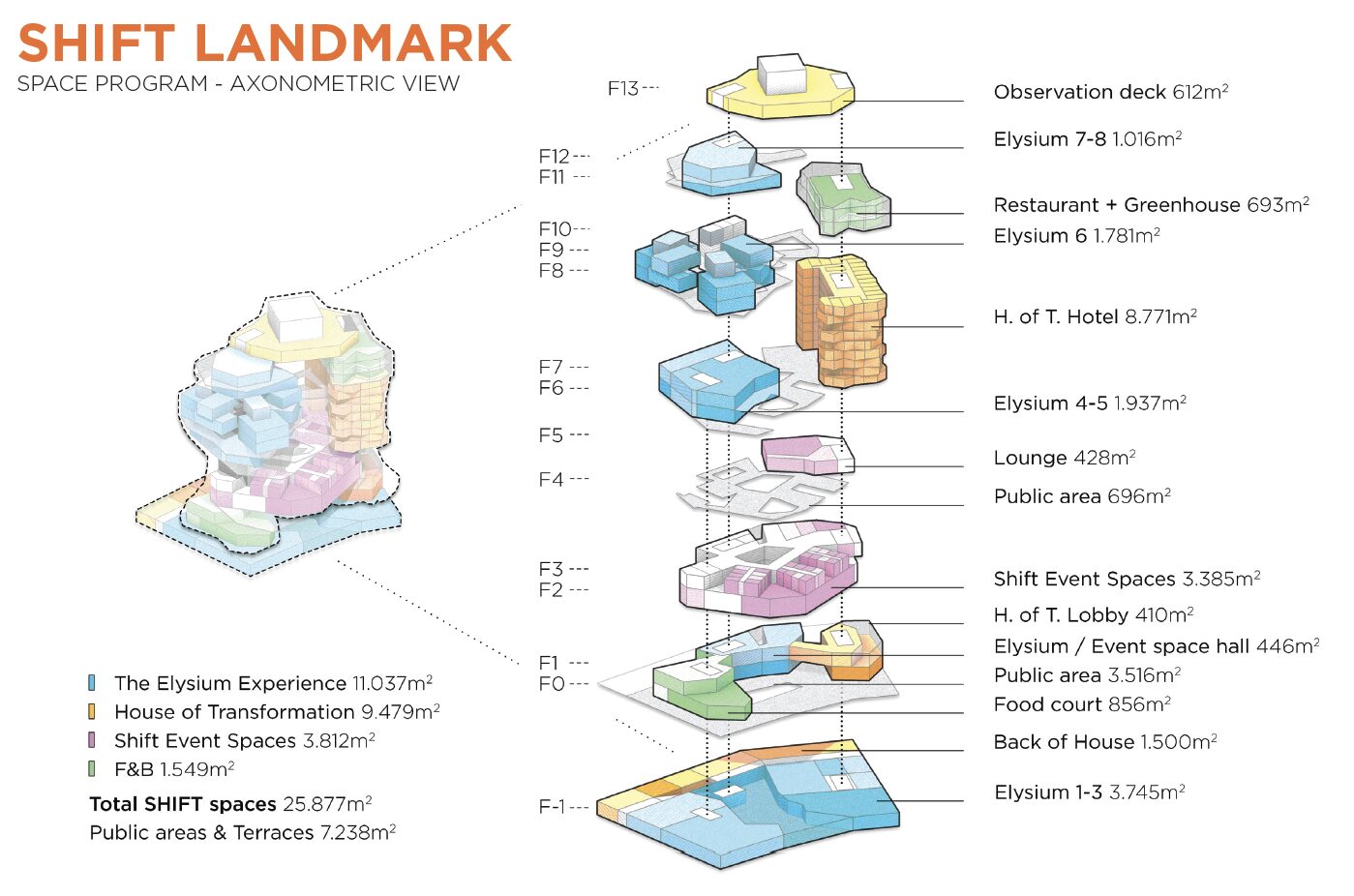
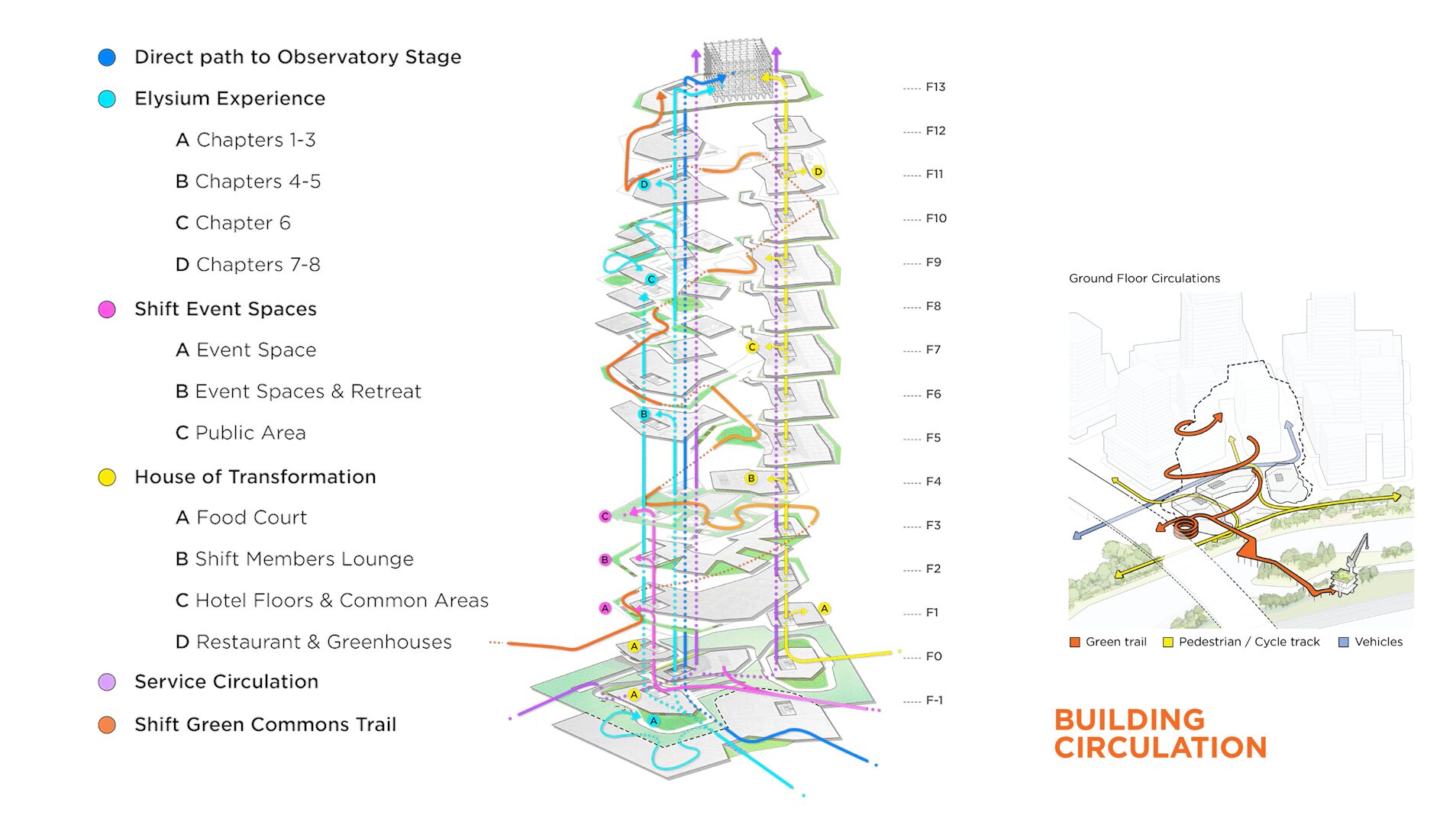
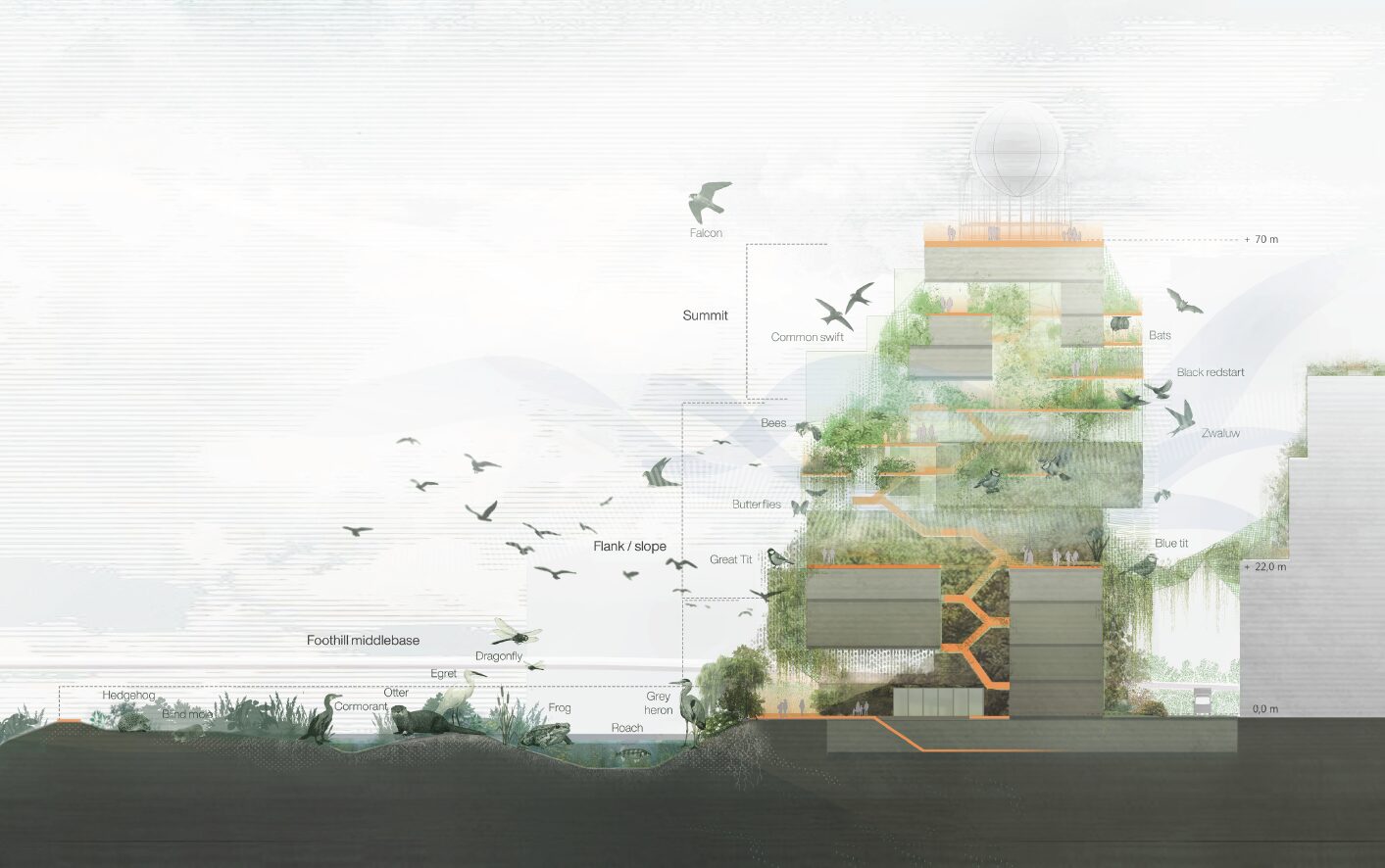
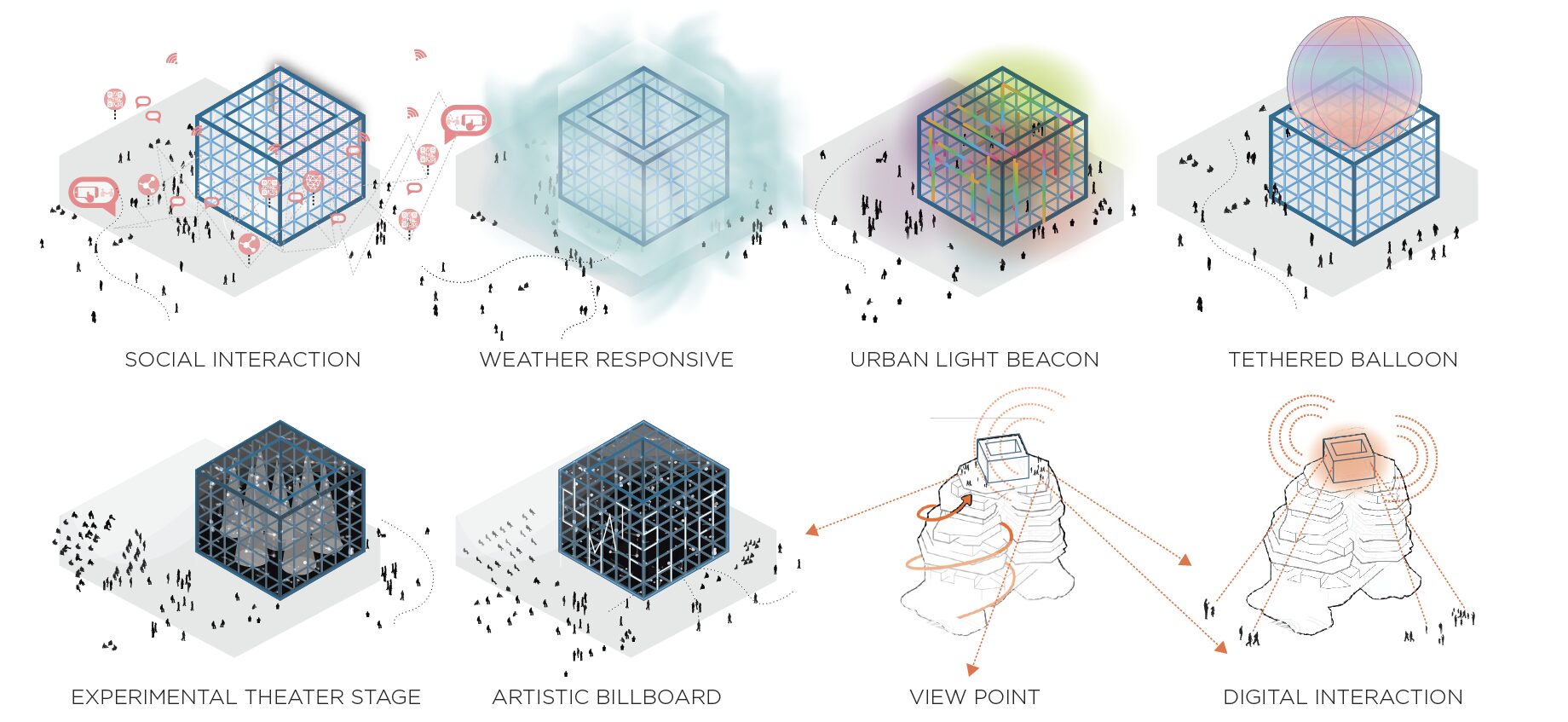
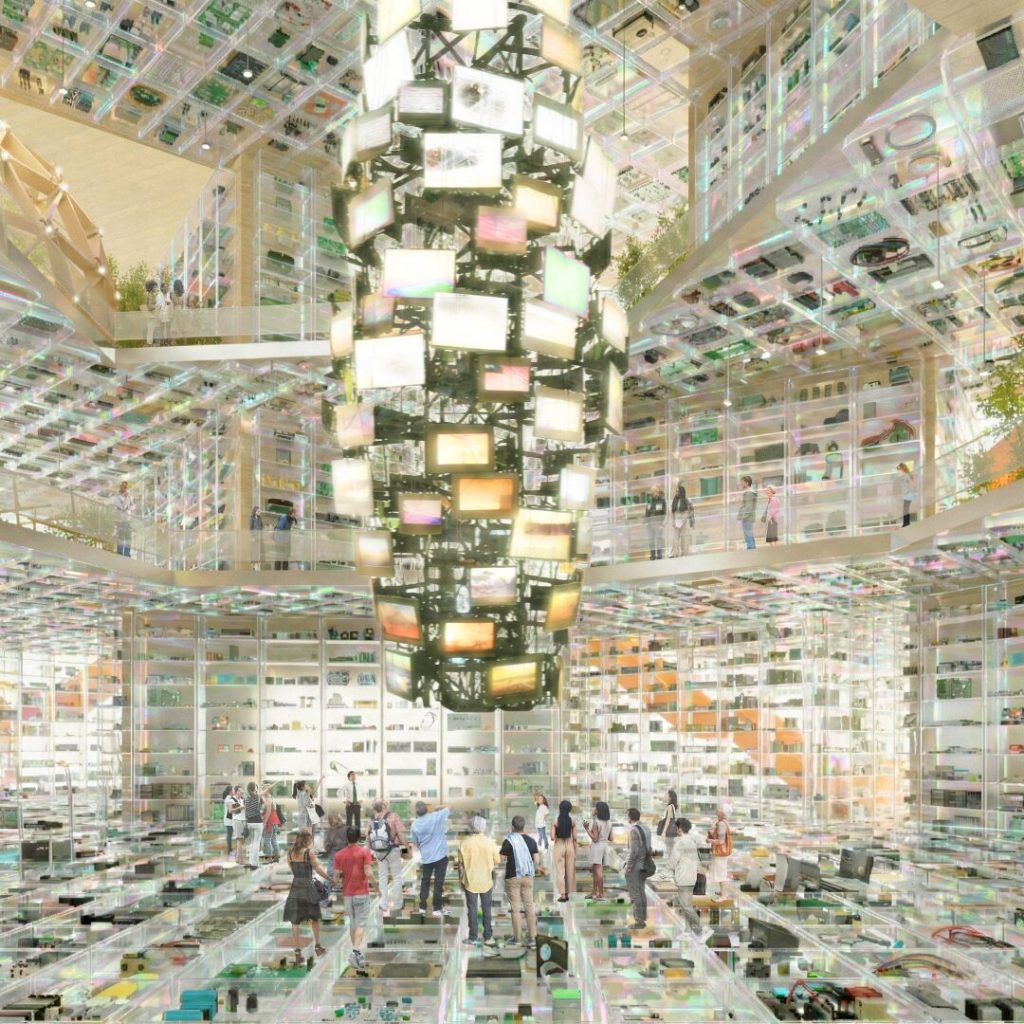
Green public areas expand and inhabit the structure allowing visitors and locals to traverse the building from the ground floor Plaza to its “Observation Stage Summit”. Along this vertical journey, they engage in a creative dialogue with a range of hybrid indoor programs, including exhibition and cultural spaces, a hotel, restaurants, a convention center, and co-working areas.
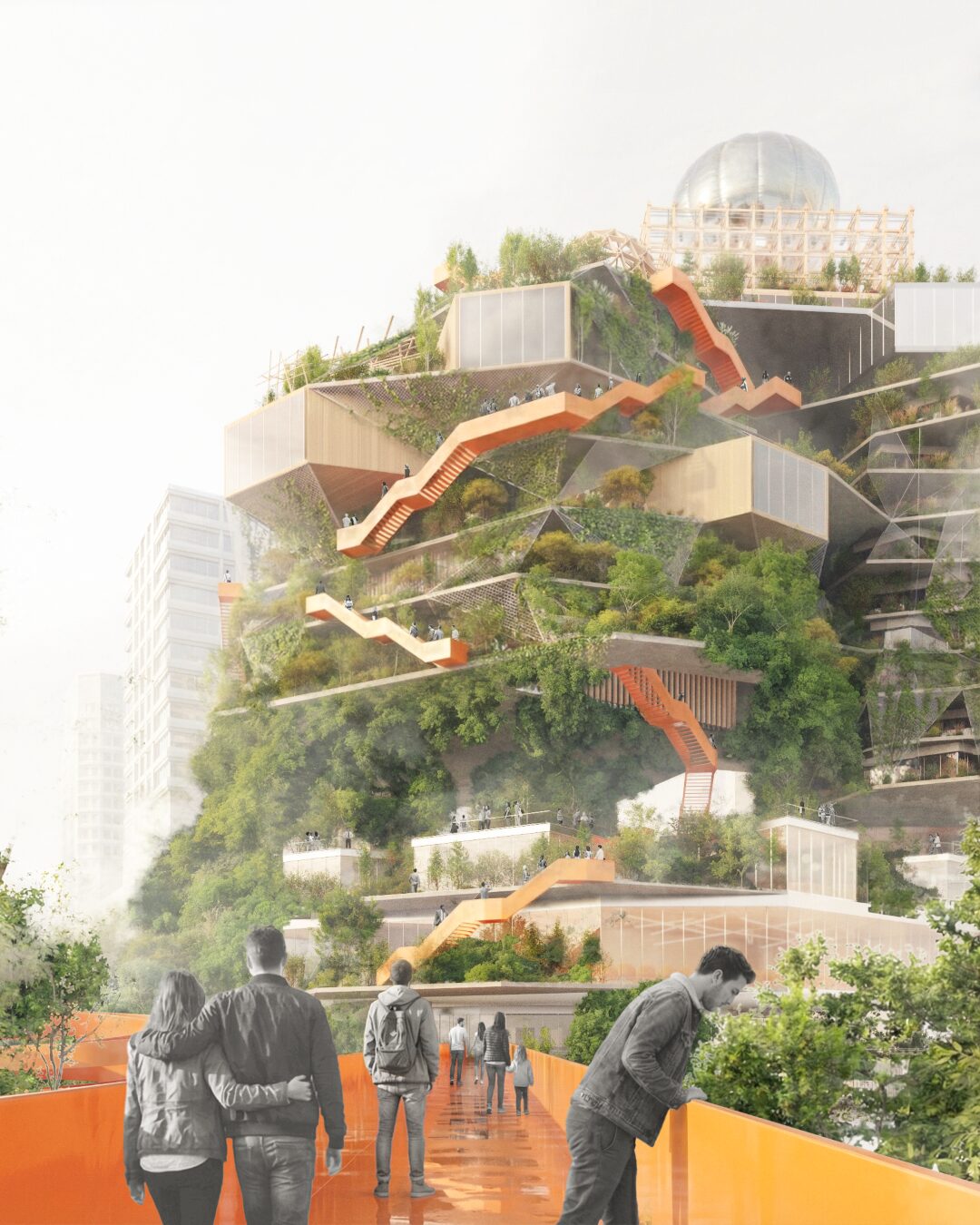
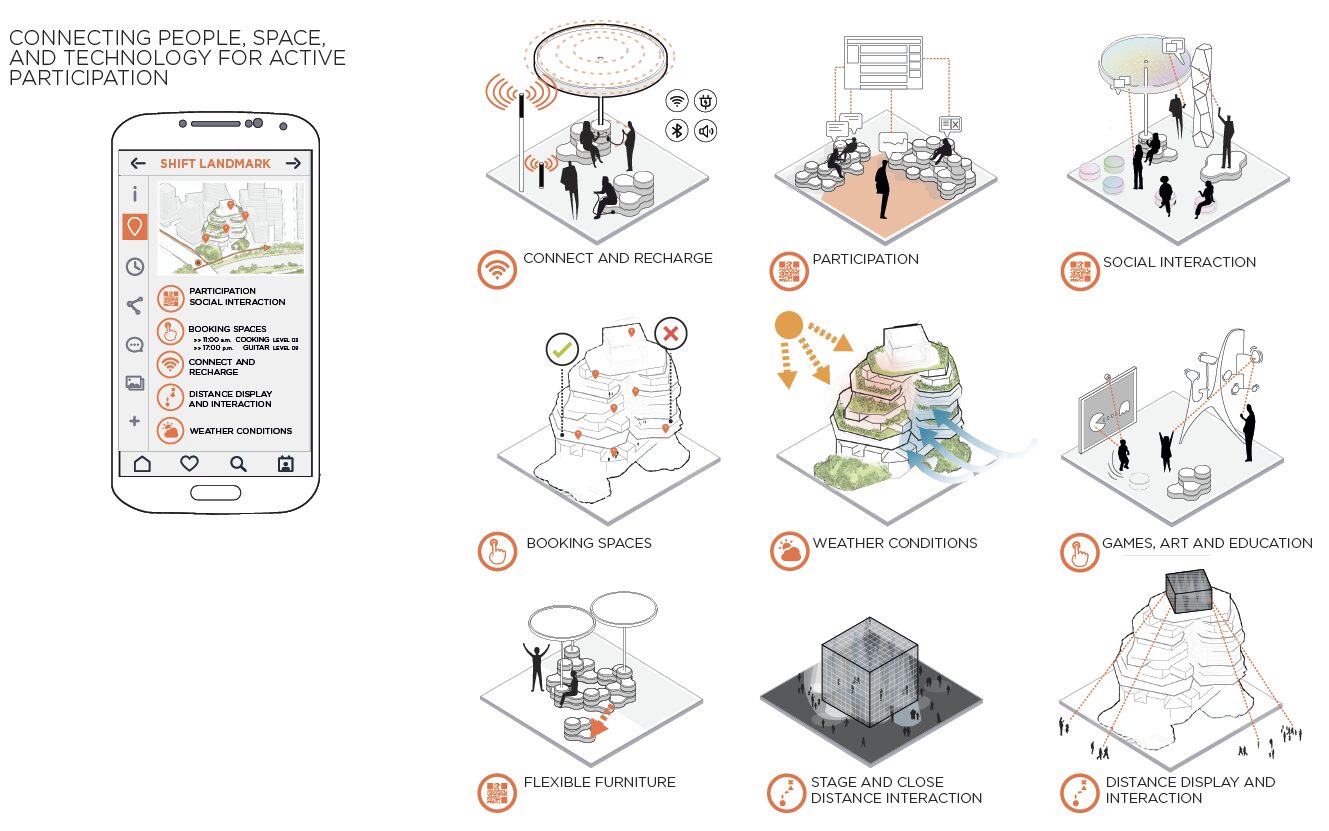
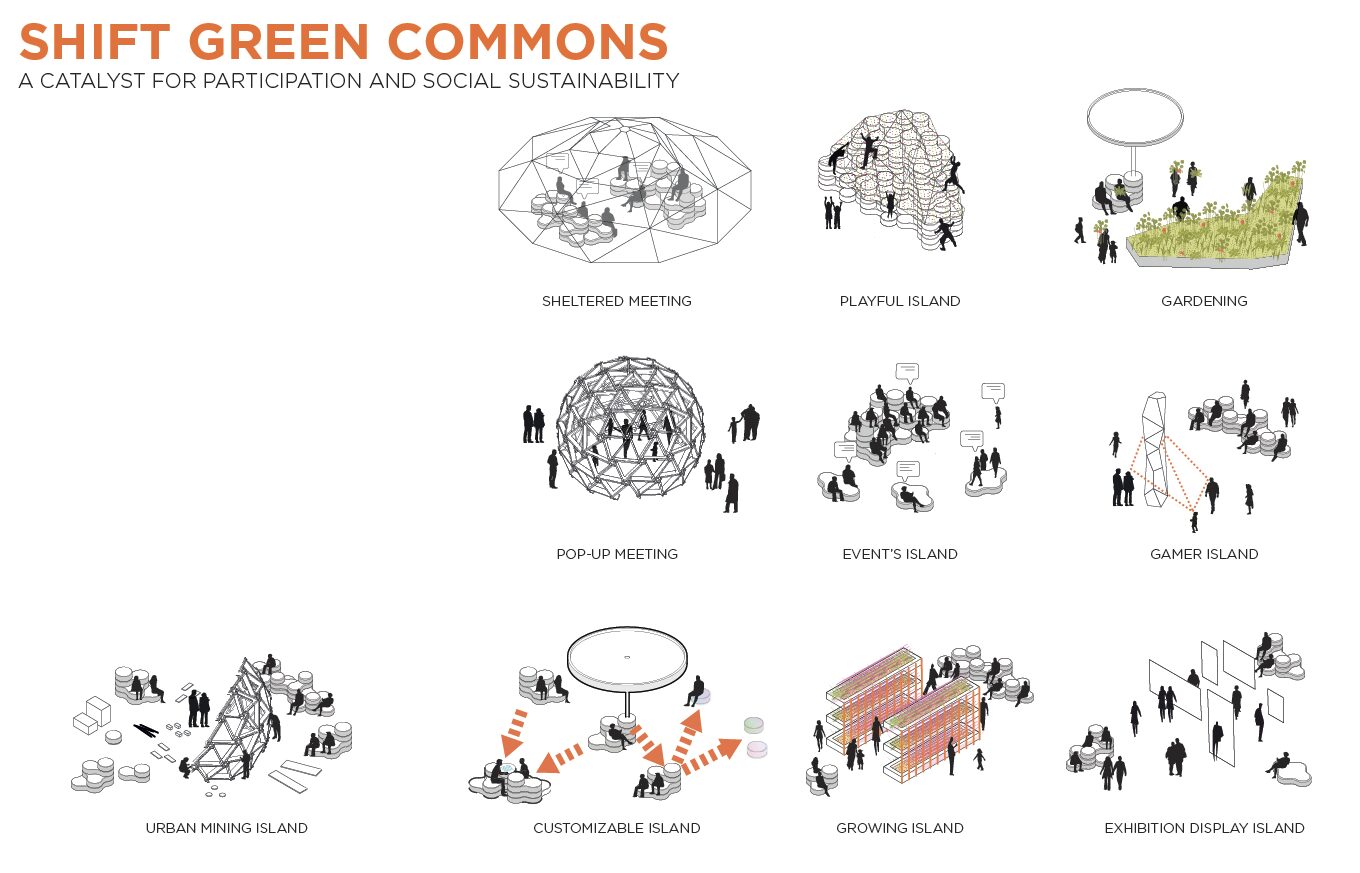
Shared outdoor collaborative areas are continuously adapted, reused, and reprogrammed as new resources, needs, and opportunities emerge. By combining nature with social activity and interaction, the building is never static, it transforms and regenerates collectively, remaining deeply connected to its environment and surrounding communities.
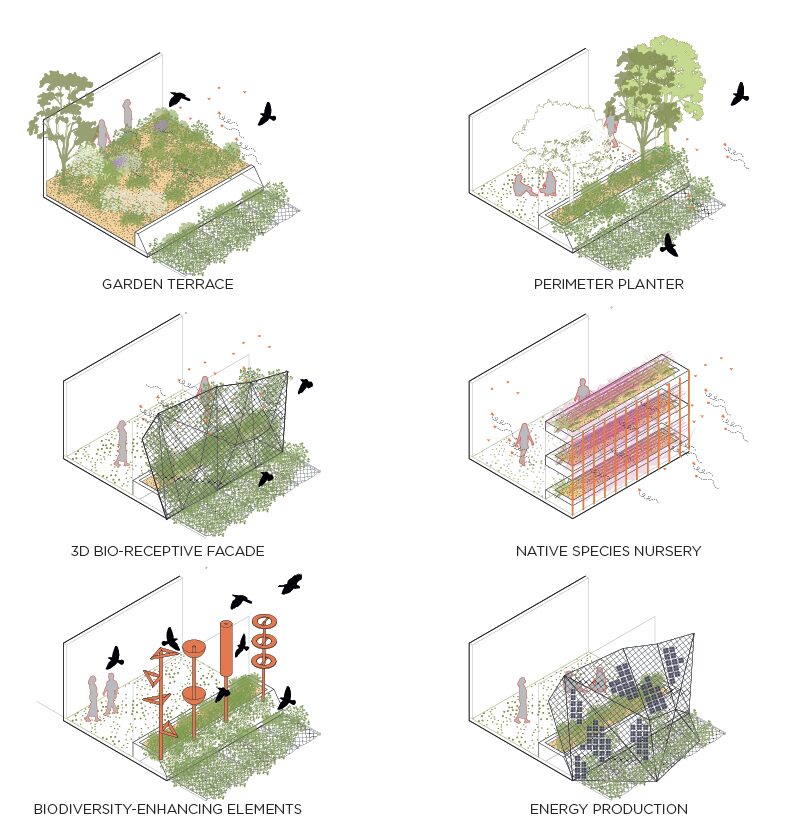
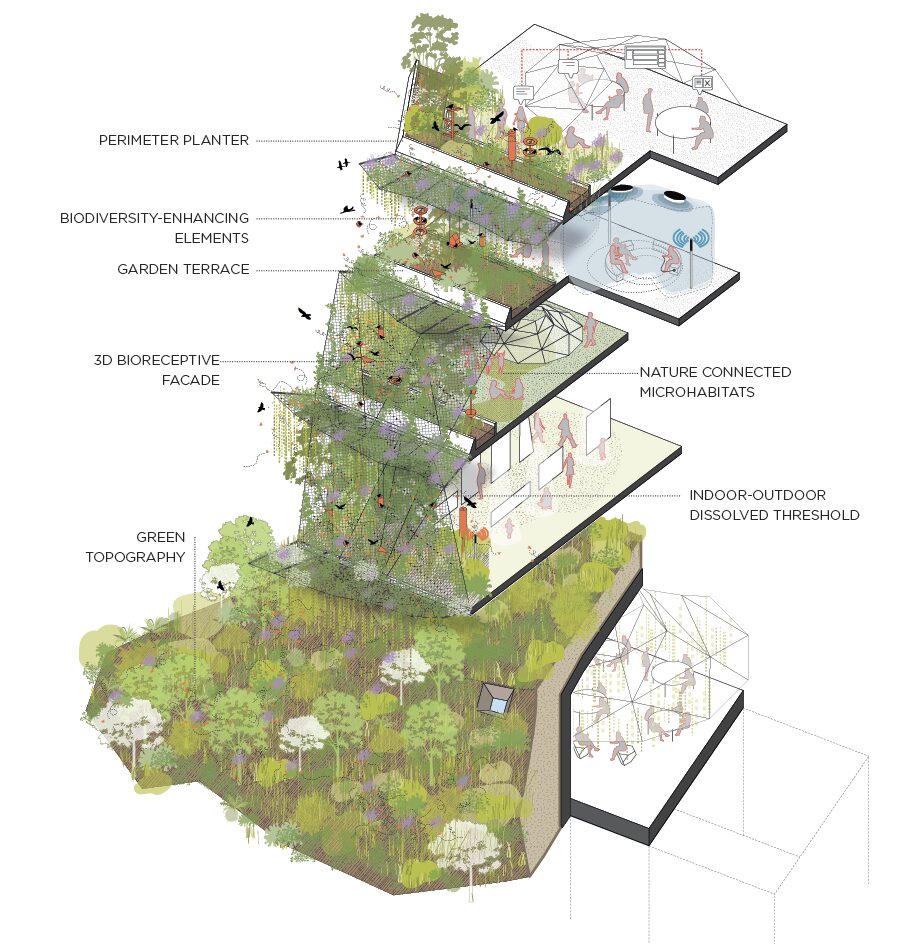
The Living Landmark is selectively wrapped in a bio-receptive layer that supports the life and development of diverse species: plants, insects, and birds. Green species grow over a mix of greenhouse textiles and biodegradable nets, anchored to a lightweight structure of reclaimed steel and timber, forming a 3D surface where species can nest and thrive. This adaptive envelope not only creates urban habitats but also performs climatic functions, regulating temperature and responding to changing weather. The “Polinature Habitat” transforms the building into a living landscape, where architecture, ecology, and technology merge into a dynamic urban ecosystem.
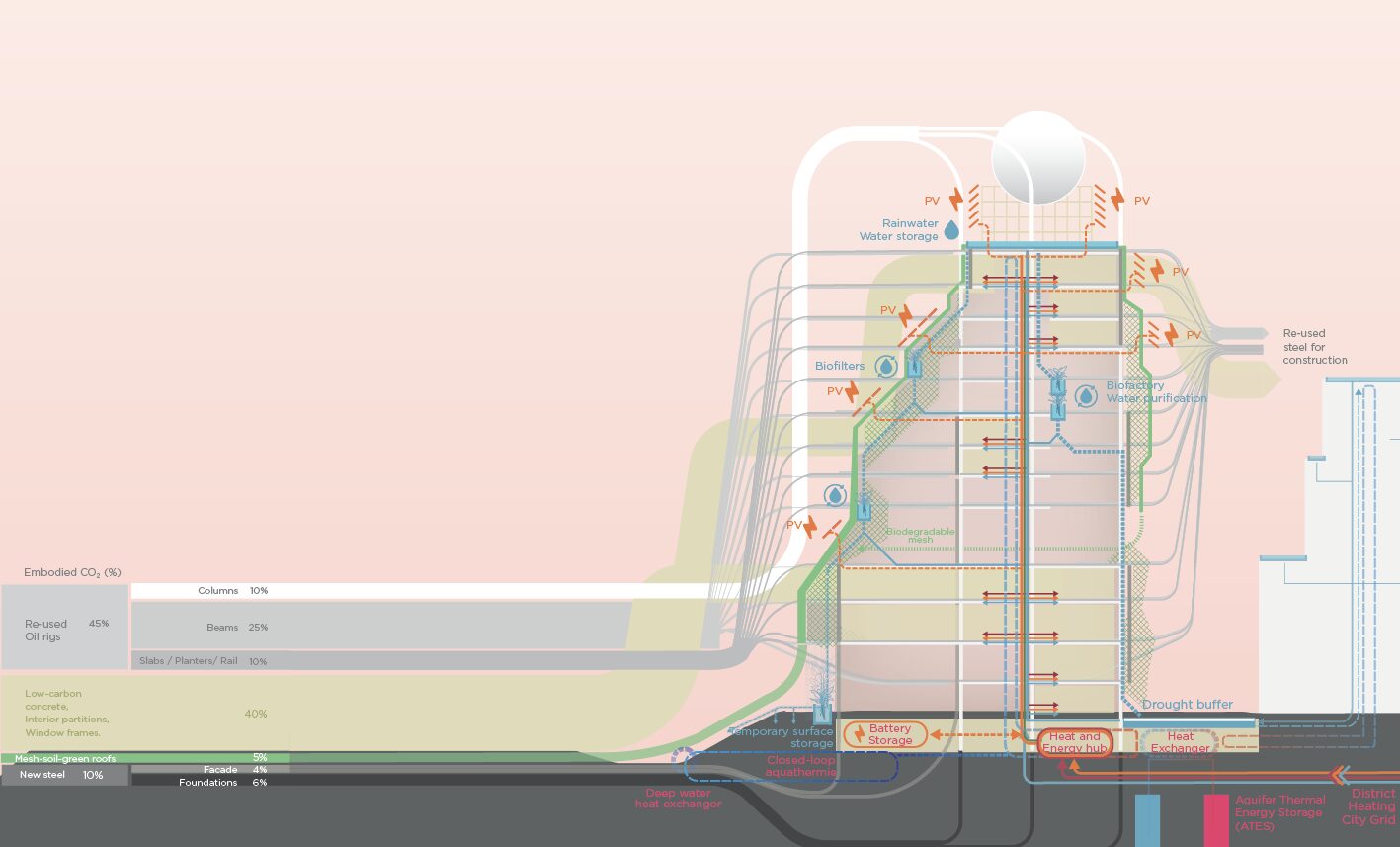
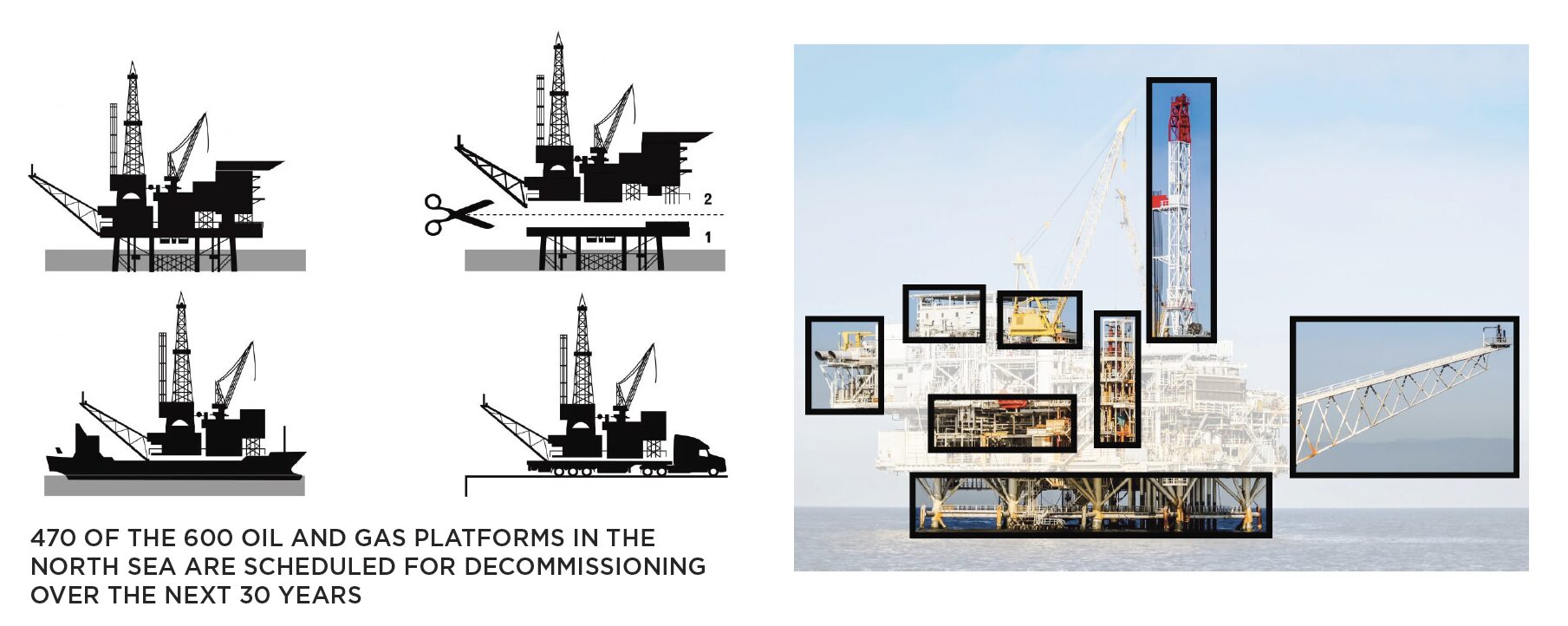
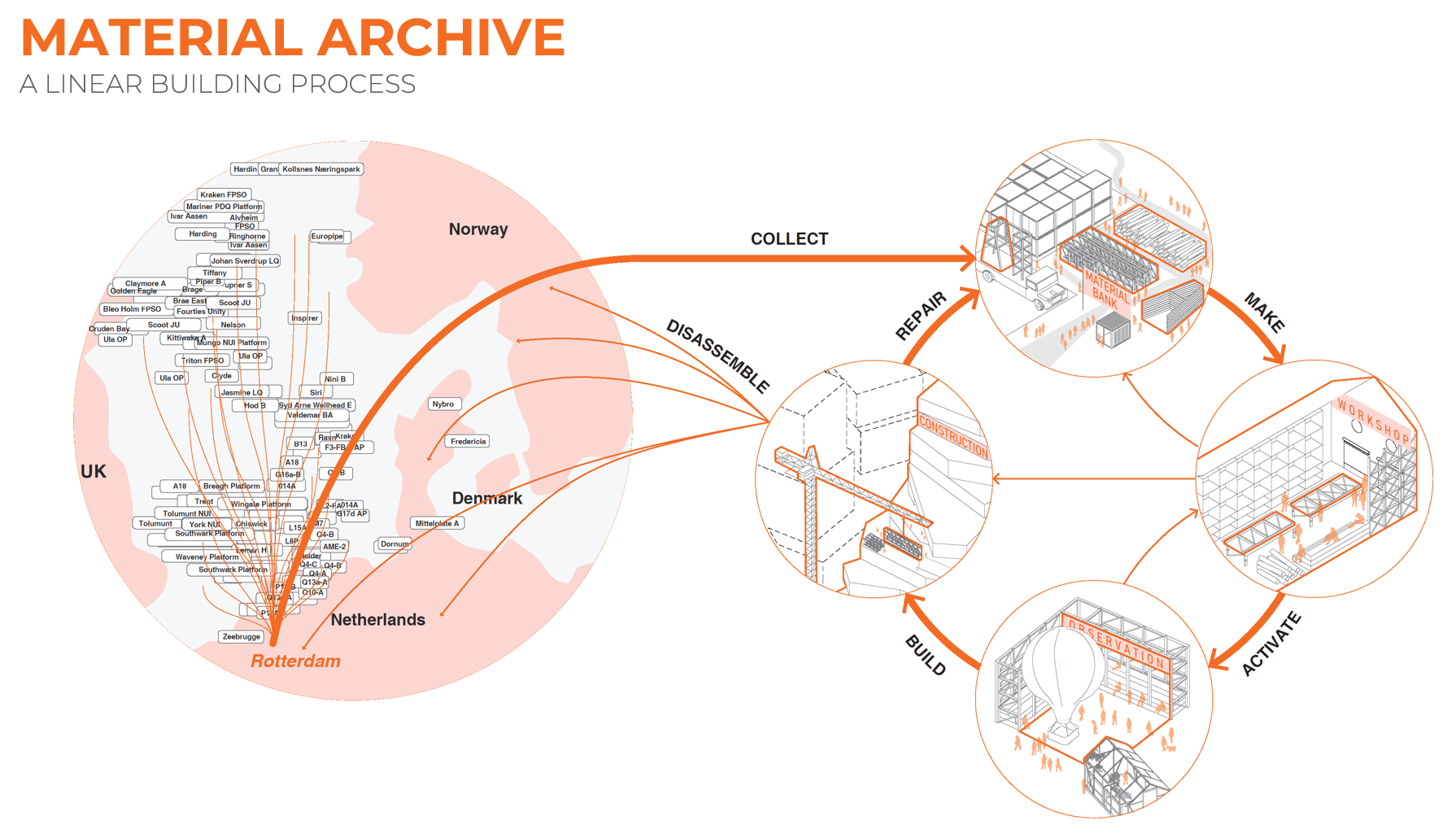
The material strategy of the Living Landmark is rooted in Rotterdam’s context and prioritizes regional abundance: reclaimed steel from decommissioned North Sea oil platforms. Reused for both the primary structure and secondary elements, it significantly reduces embodied carbon emissions. The design is conceived for disassembly, enabling components to enter future lifecycles and return long-term value to the city.
Credits & Collaborators
Ecosistema Urbano: Belinda Tato, José Luis Vallejo, Marco Rizzetto, Elena Castillo, Jorge Izquierdo, Águeda Pérez, Francisco Téllez, Álvaro Mieres, Gabriel Gino, Jingyuan Huang
Fabrications: Eric Frijters, Eric Wesley, Yara Mahmoudyar, Fabio Martínez
Arup: Stuart Smith, Ana Versteeg
A project promoted by @shift.the.world


