

BOSTON (MASSACHUSETTS, USA)
Client: Pao Arts Center
Date: 2025
Status: Completed
Program: Plug-in urban furniture for combatting extreme heat and increasing biodiversity in urban settings
Scope: Design and construction
In the face of climate change, as urban spaces grow increasingly uninhabitable during summer heat waves, we must integrate immediate, tangible solutions into the public realm—interventions that lower temperatures and enhance quality of life for both humans and other species.

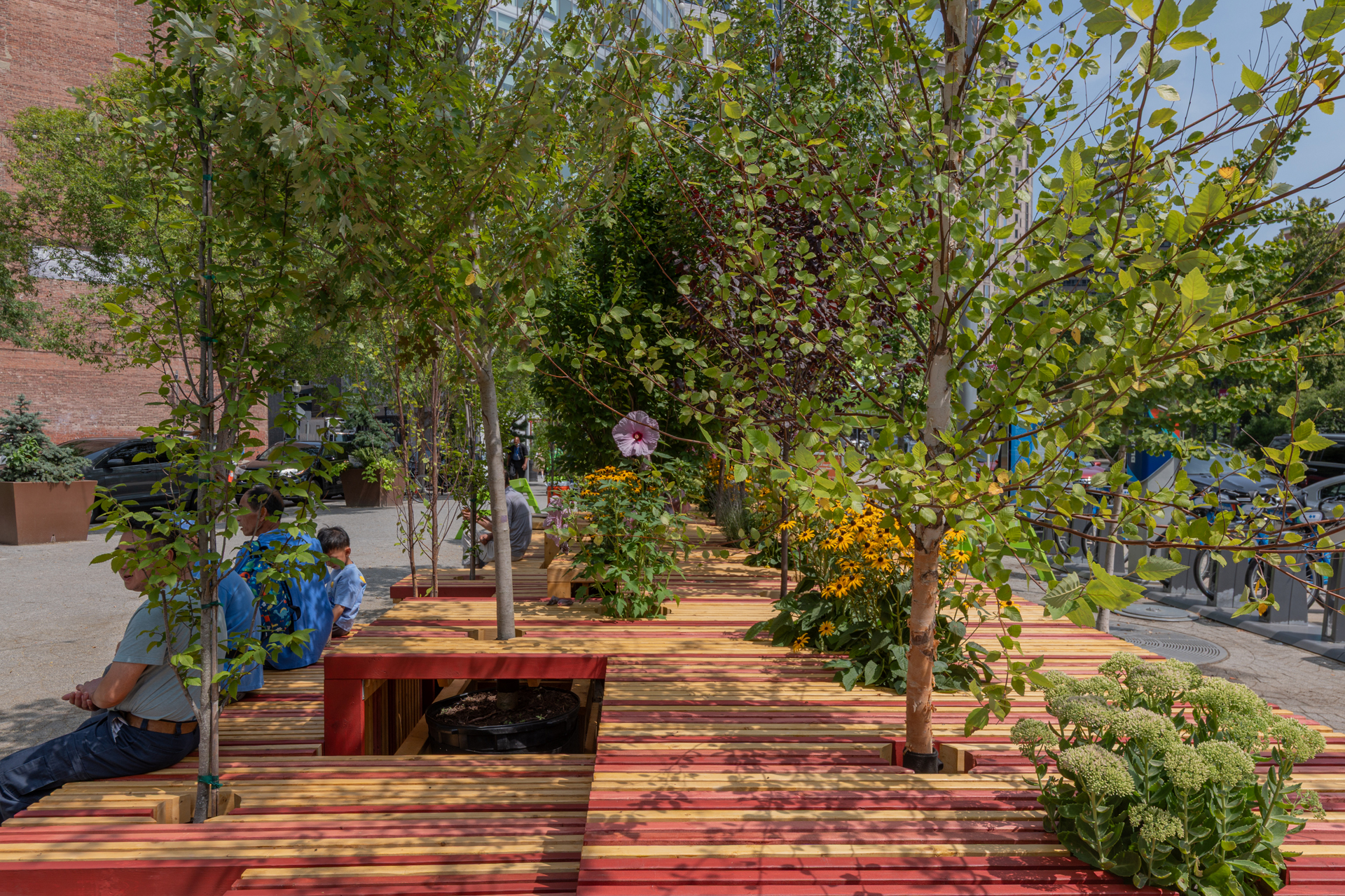
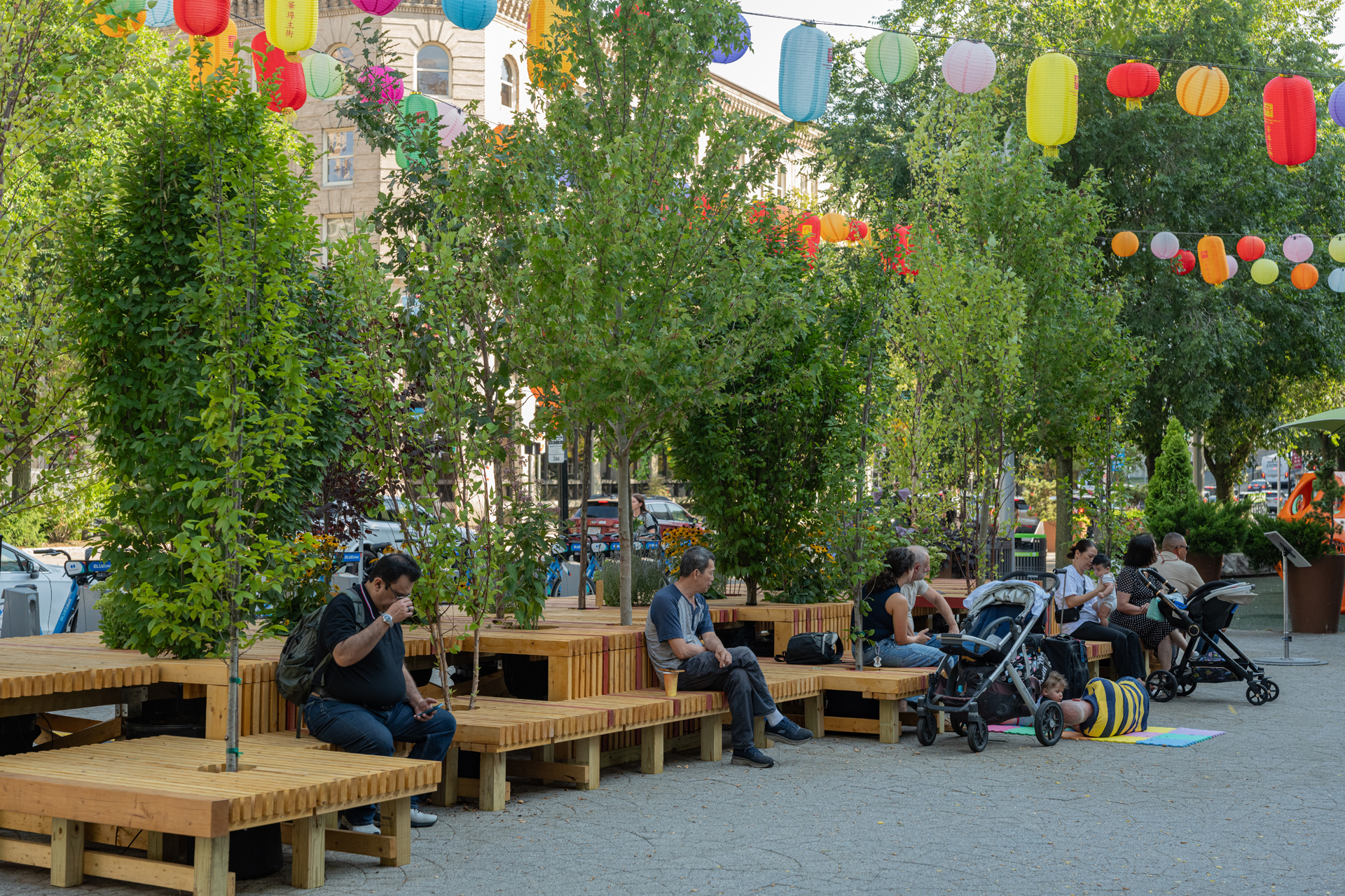
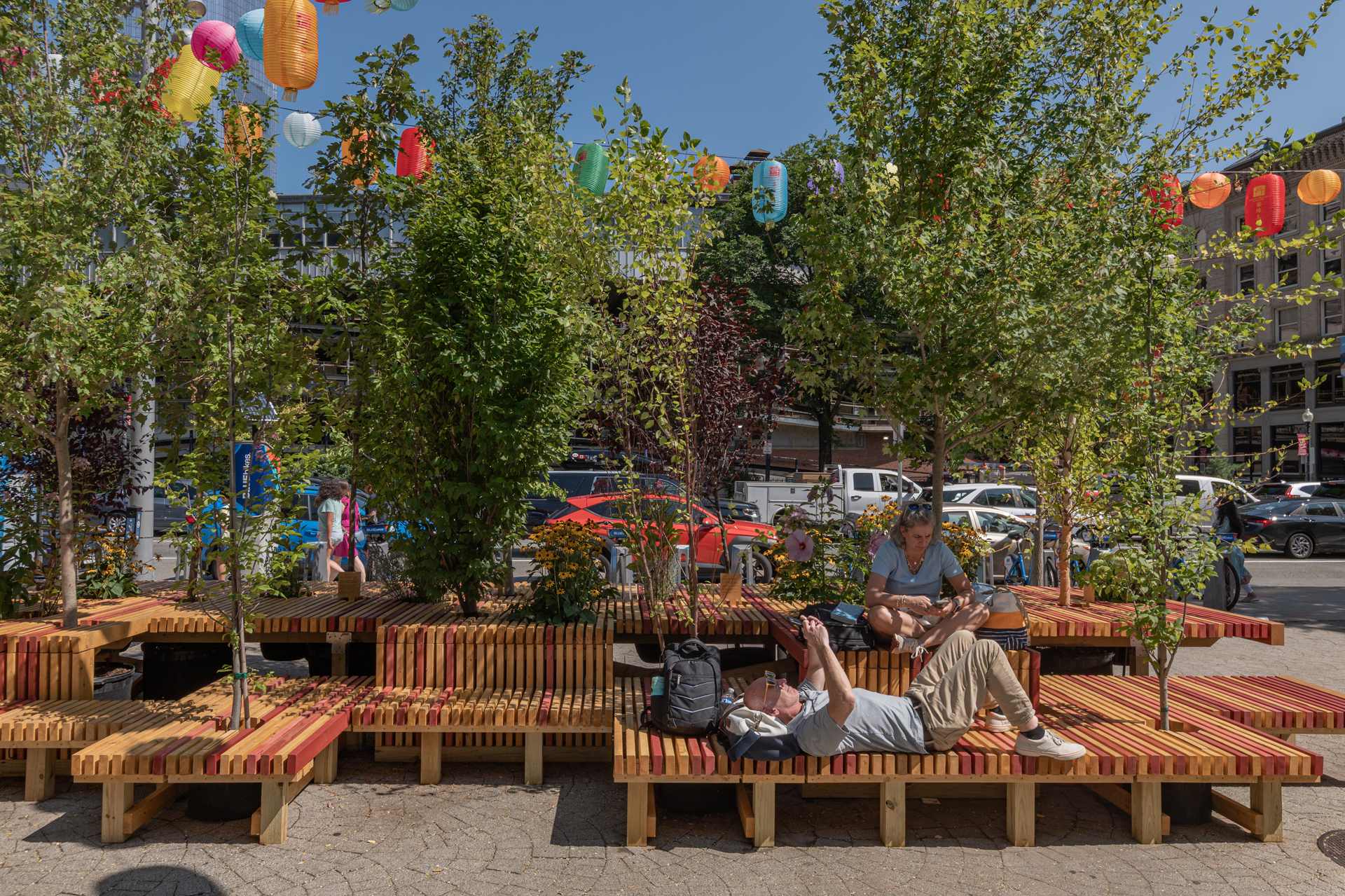
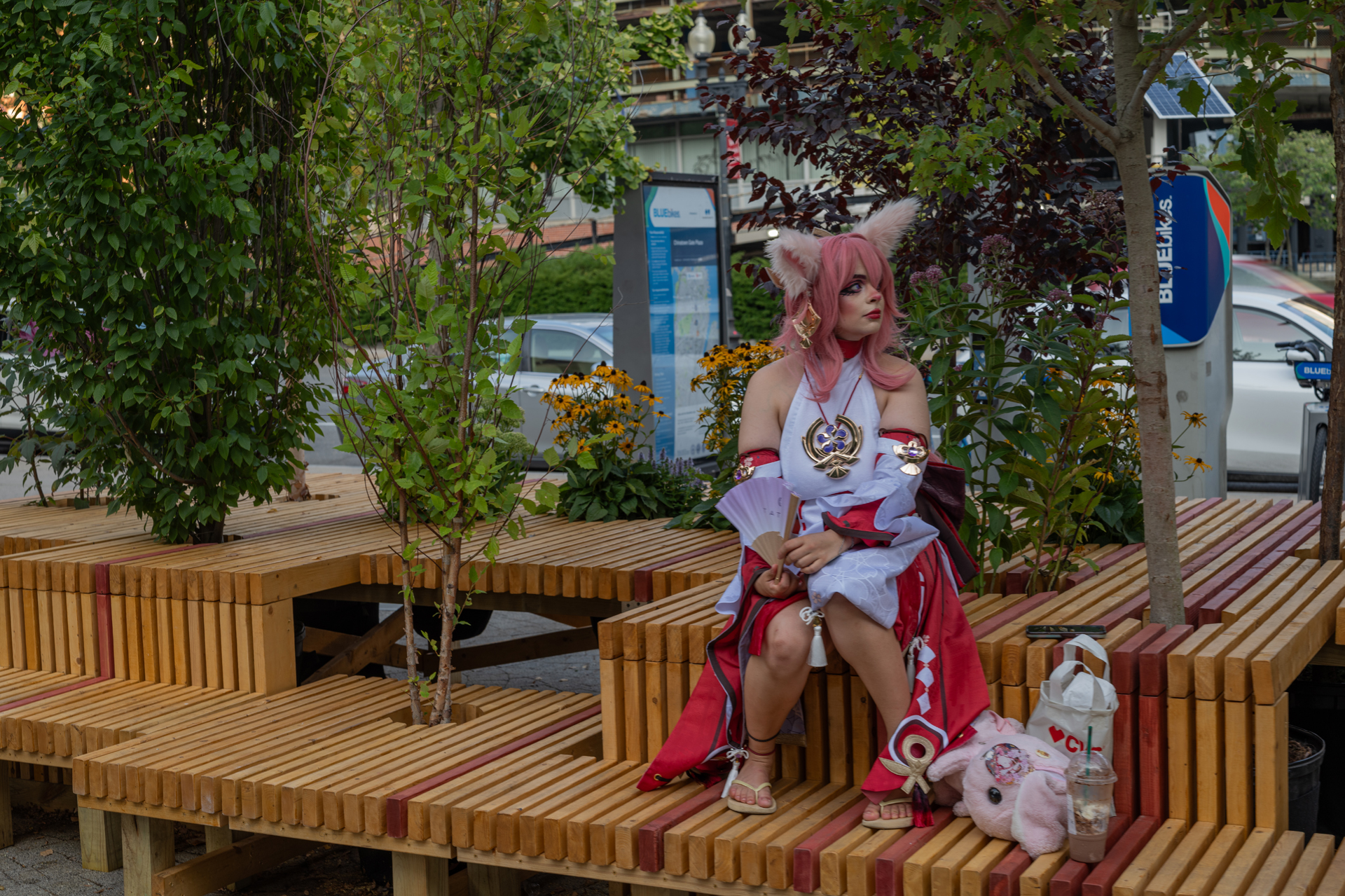
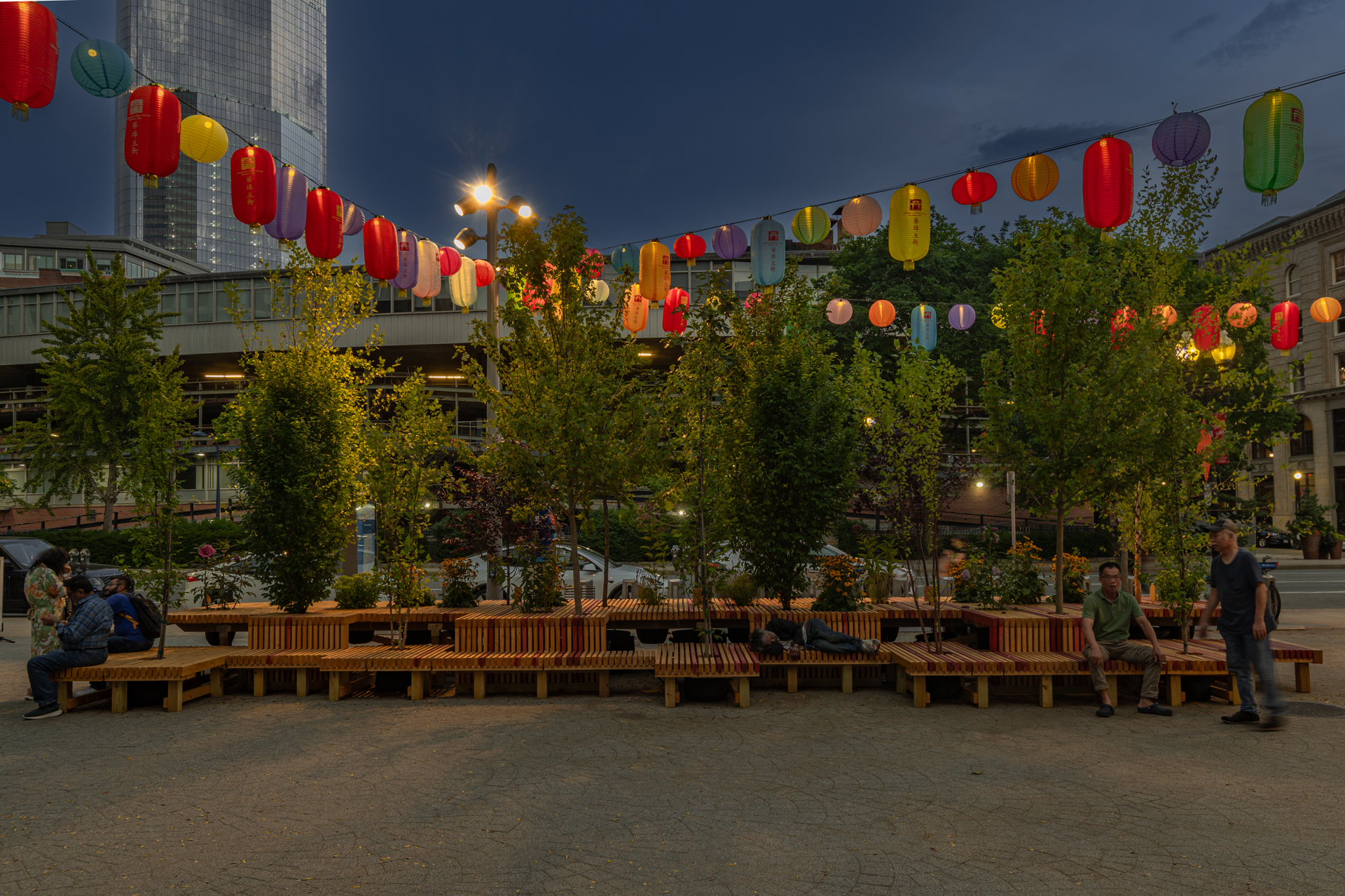
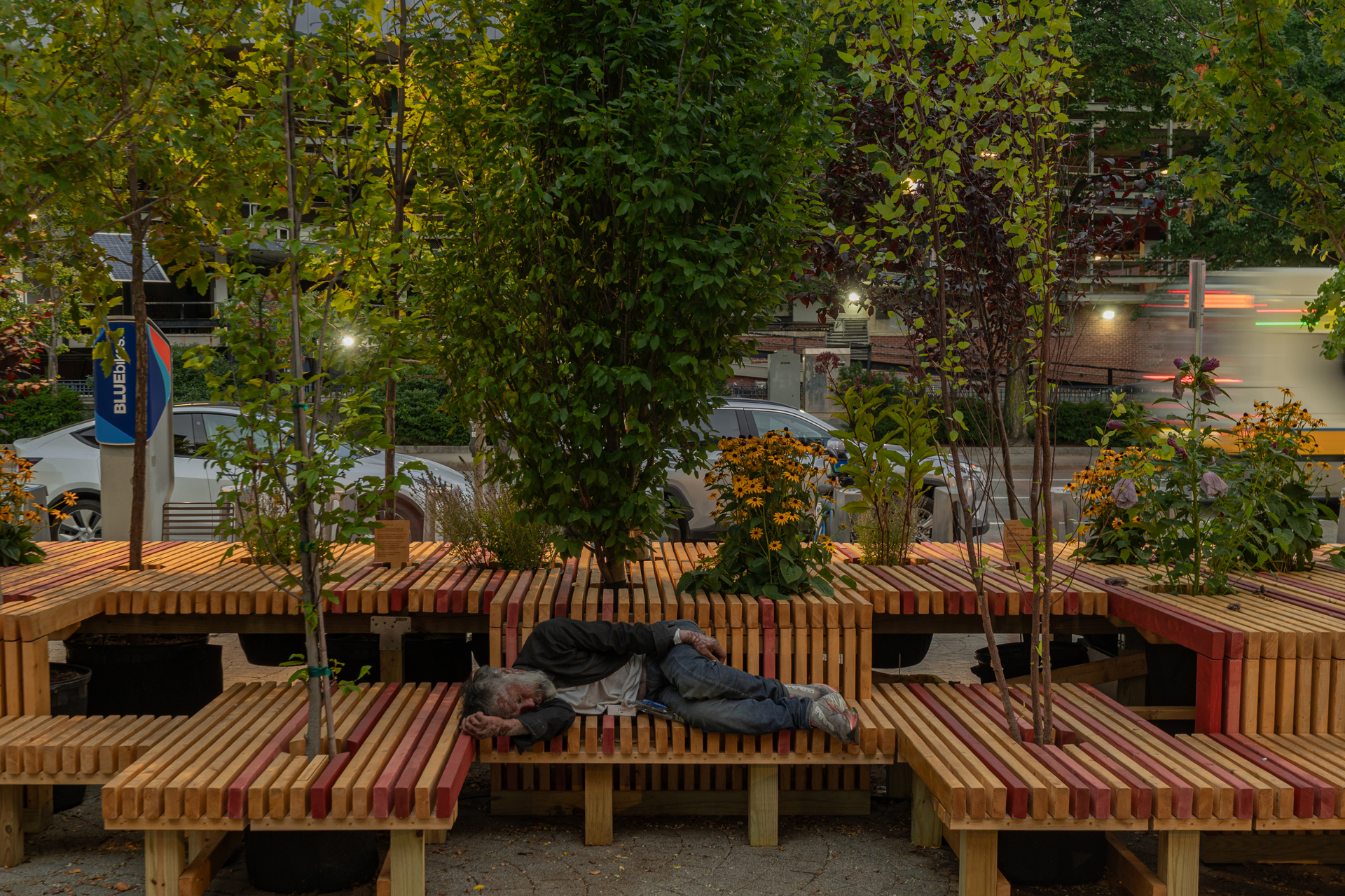
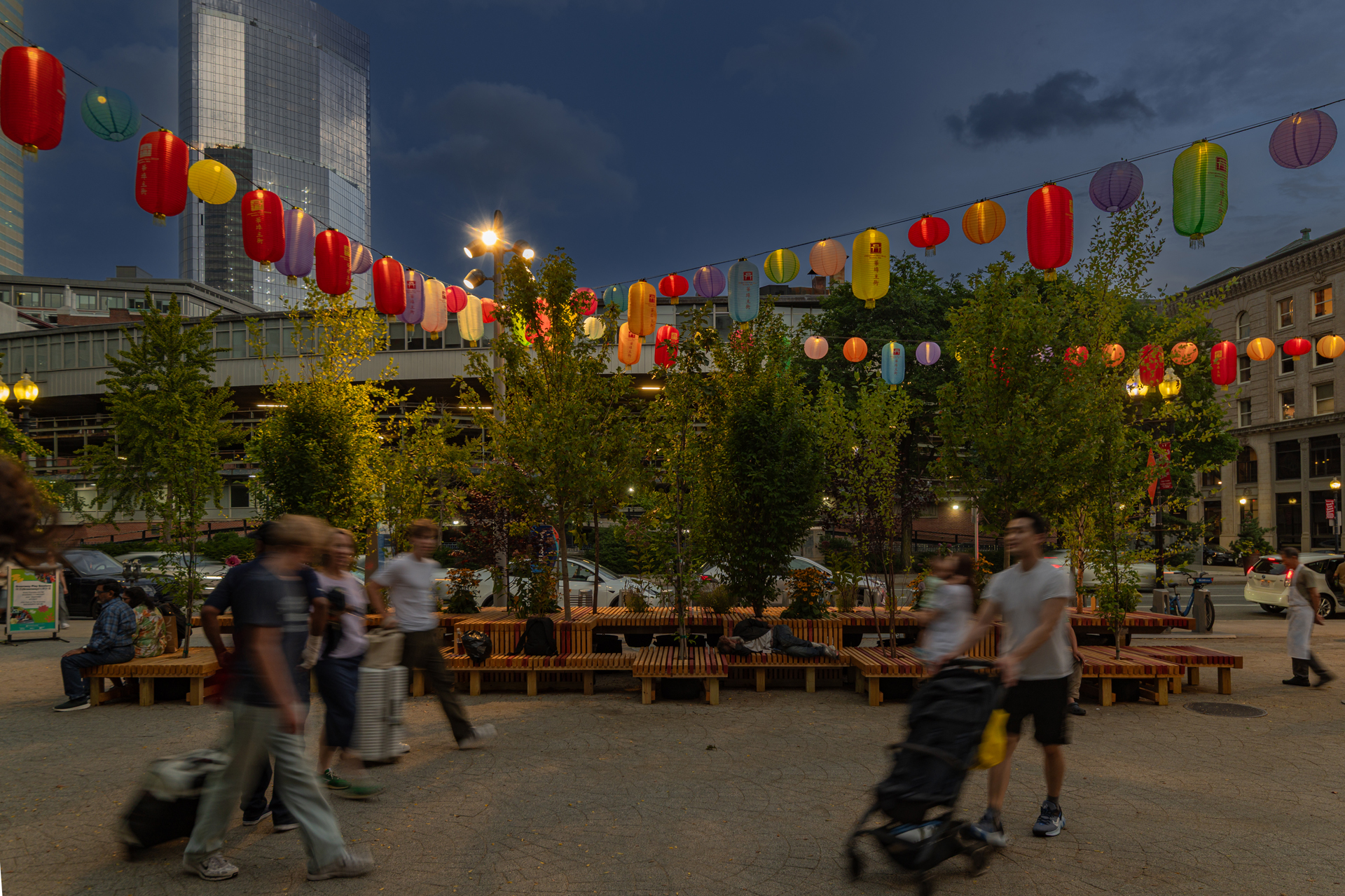
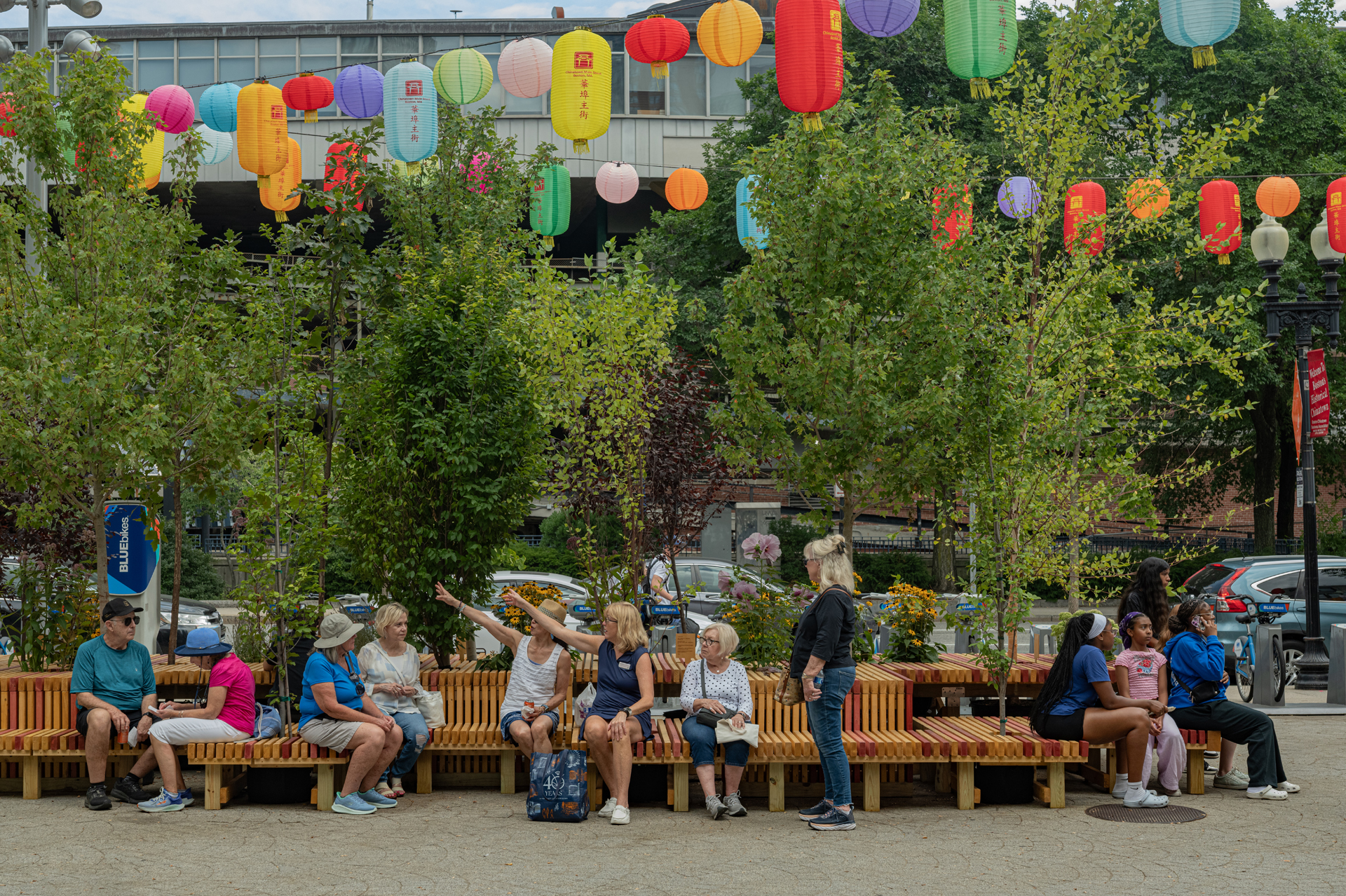
PlanTable provides a vital refuge—not only for people, but also for pollinators whose populations are threatened by rising temperatures and habitat loss. Conceived as a modular, scalable structure, it incorporates trees and pollinator-friendly plants to function as a plug-in biodiversity node within the city. It responds directly to the urgent need for accessible green space in Chinatown—Boston’s hottest neighborhood—and supports broader goals of climate justice and neighborhood resilience.

The installation hosts 16 trees and a diverse palette of perennial plants selected to attract pollinators. While temporary in form, its impact is designed to last: once the installation concludes, all vegetation will be distributed to community members, allowing its ecological and social benefits to continue growing over time.


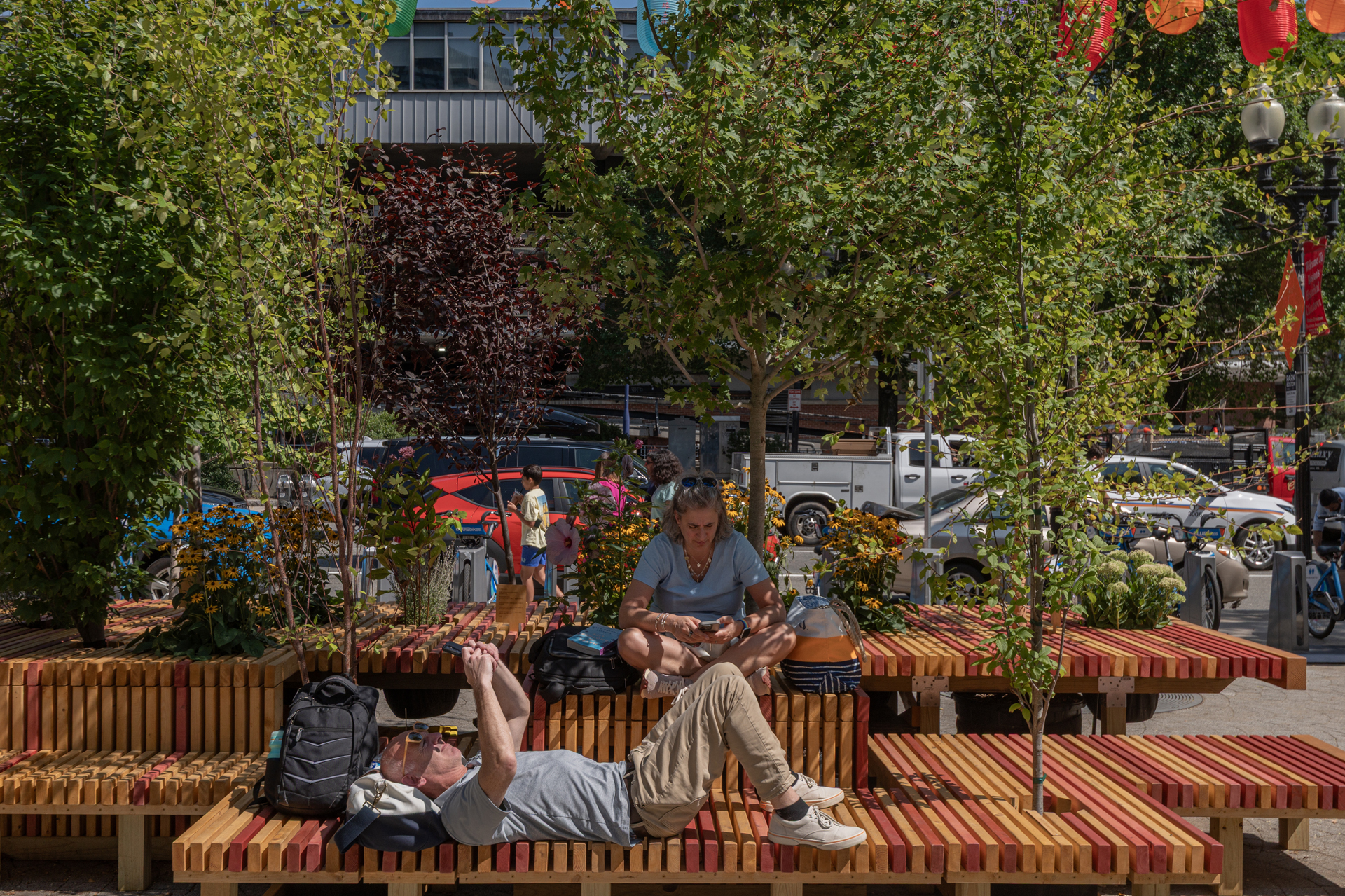
Blending landscape architecture, horticulture, and art, PlanTable creates a welcoming space for people of all backgrounds to gather, exchange ideas, and reflect. Rooted in the spirit of Chinatown, it celebrates the neighborhood’s enduring culture of hospitality and inclusion.
The table also serves as a climate timeline, visualizing the rise in temperatures since 1870—the founding year of Chinatown. Highlighted bars mark the years when temperatures exceeded historical averages, revealing an accelerating trend that continues today.

PlanTable is both a statement and a solution—illuminating the city’s critical canopy gap while showing how nature can shape more equitable, inclusive, and resilient public spaces. It offers sanctuary and stands as a living example of how cities can adapt to sustain life in an era of climate crisis.
The installation includes the following tree species: Acer rubrum ‘Redpointe’, Betula nigra ‘Heritage Cully’, Carpinus betulus ‘Franz Fontaine’, Quercus bicolor ‘Swamp White Oak’, Prunus cerasifera ‘Thundercloud’, Carpinus betulus ‘Lucas’, and Betula nigra ‘Heritage Cully’.


Credits & Collaborators
Concept and design: Ecosistema Urbano
Project Directors: Belinda Tato and Jose Luis Vallejo
Coordination and Execution Management: Marco Rizzetto
Design team: Elena Castillo, Vicky Vlachodimou, Jorge Izquierdo, Lily Liebes, Thomas Henderson, Fernando Garrido, Dennis Sola, Julia Casado.
Collaborators:
Engineering: Tim Franklin. Theta Consulting
Ecological Consultant: Max Piana
Photography: Emilio P. Doiztua
Harvard GSD Fabrication Lab – Signage: Fernando Garrido
PlanTable is part of the Un-monument Initiative presented by Pao Arts Center, in collaboration with the City of Boston Mayor’s Office of Arts and Culture and community partner The Greenway Conservancy. It is brought to you by a grant from the Mellon Foundation.
We extend a special thank you to the Pao Arts Center, its director, Cynthia Woo, and curator, Lani Asunción, for providing us with this opportunity and for their generous support throughout the process.


